

Volume 13, Issue 2 (June 2026)
J. Food Qual. Hazards Control 2026, 13(2): 80-88 |
Back to browse issues page


Ethics code: Not applicable.


Download citation:
BibTeX | RIS | EndNote | Medlars | ProCite | Reference Manager | RefWorks
Send citation to:


BibTeX | RIS | EndNote | Medlars | ProCite | Reference Manager | RefWorks
Send citation to:
Mahatmanti F, Alauhdin M, Kusumaningrum S. Chitosan-Based Colorimetric Smart Label: A Real-Time Indicator for Monitoring Freshness of Animal and Plant-Based Foods. J. Food Qual. Hazards Control 2026; 13 (2) :80-88
URL: http://jfqhc.ssu.ac.ir/article-1-1397-en.html
URL: http://jfqhc.ssu.ac.ir/article-1-1397-en.html


Biology Education Study Program, Faculty of Teacher Training and Education, Universitas Tidar, Indonesia
Full-Text [PDF 664 kb]
(248 Downloads)
| Abstract (HTML) (241 Views)
, M. Alauhdin 1, S.B.C. Kusumaningrum 2
1. Chemistry Study Program, Faculty of Mathematics and Natural Sciences, Universitas Negeri Semarang, Indonesia
2. Biology Education Study Program, Faculty of Teacher Training and Education, Universitas Tidar, Indonesia
HIGHLIGHTS
The acidity of spoiled food changes, as reflected in its pH, therefore, pH-based sensor labels can be used to indicate the freshness of food products. Anthocyanins are water-soluble pigments that give fruits, vegetables, and flowers their red, purple, and blue colors. They are pH-sensitive and exhibit a range of colors at varying pH values. Thus, anthocyanins have the potential to be used as materials for making smart labels. They are also biocompatible and have potent antioxidant and antibacterial activities. Nevertheless, anthocyanins are susceptible to degradation, which can alter their chemical and physical properties. To enhance their stability and pH sensitivity, anthocyanins can be encapsulated within a film matrix. A pH-sensitive smart label has been developed by creating a quaternary ammonium salt nano-complex of chitosan-sodium alginate (Zhang et al., 2024). This nano complex was loaded with anthocyanins and incorporated into a polyvinyl alcohol matrix to monitor milk freshness.
Anthocyanins are present in various fruits, flowers, leaves, bark, and grains. Anthocyanins can be extracted from red beet (Ranjbar et al., 2023), purple yam (Li et al., 2023), purple sweet potato (Yana et al., 2021), black rice (Zeng et al., 2023), and butterfly pea flower (Narayanan et al., 2023). They have been widely used to prepare smart labels for food quality monitoring. Among the anthocyanin sources, butterfly pea flower (Clitoria ternatea) extract exhibits the highest pH sensitivity (Rawdkuen et al., 2020), enabling butterfly pea flower anthocyanins to display color changes (ΔE) across various pH levels. These pH-dependent optical properties make anthocyanins from butterfly pea flower extracts a promising biosensor agent for detecting food product spoilage. The stability of anthocyanins from butterfly pea flowers is relatively low; however, they exhibit a strong halochromic response to pH changes, with a characteristic blue color due to their high ternatin content, a polyacylated derivative of delphinidin 3,3′,5′-triglucoside (Channa et al., 2025). Dye extraction from butterfly pea flowers was carried out using a maceration method with ethanol as the solvent, yielding 55% with a total anthocyanin content of 1113.3 mg/L (Mahatmanti et al., 2024).
The carrier polymer used to encapsulate natural pigments in the production of smart labels is generally a natural polymer, such as chitosan. Chitosan is non-toxic, biodegradable, chemically stable, and forms films readily (Li et al., 2023). Chitosan has been recognized by the United States Food and Drug Administration (US-FDA) as a non-toxic and safe material to use (Purohit et al., 2023), leading to its extensive application in food packaging development. Chitosan also exhibits high antioxidant and antibacterial activities (Haghighi et al., 2020). However, chitosan is sensitive to moisture (dos Santos et al., 2017), which can interfere with its function as a matrix or film for dyes. Thus, it cannot accurately display ΔE (Zheng et al., 2023). Therefore, other materials such as wax, lipids, and oils can be added to the chitosan matrix to overcome these drawbacks.
Incorporating essential oils effectively reduces water vapor permeability of bioplastic films and enhances their flexibility (Mukurumbira et al., 2022). An increased essential oil concentration correlates with decreased water absorption capacity and reduced water vapor permeability (Sharma et al., 2021). Essential oil enhanced the antioxidant effects of chitosan (Flórez et al., 2022). Ginger essential oil is rich in bioactive compounds, including phenolic compounds such as gingerols and shogaols, contributing to its antioxidant, anti-inflammatory, and antimicrobial properties. These phenolic compounds can neutralize free radicals, inhibit lipid peroxidation, and enhance the activity of endogenous antioxidant enzymes, making them a promising source of antioxidants (Showkat et al., 2025).
Biofilms composed of chitosan, butterfly flower extract, and ginger oil have been successfully synthesized (Mahatmanti et al., 2024). The biofilms exhibited visually detectable ΔE. The study demonstrated that biofilms have the potential to serve as eco-friendly packaging materials. Furthermore, biofilms can monitor pH levels, which are observable through their color.
Generally, researchers have developed smart labels for single detection, particularly for monitoring animal-based food products (Handayani et al., 2024; Kaewprachu et al., 2024; Khan et al., 2024). Therefore, this study aims to develop a chitosan-based smart label with dual detection capabilities for monitoring the freshness of both animal- and plant-based food products. The smart label is incorporated with anthocyanins and ginger oil to enhance its functionality as a freshness indicator. This research also seeks to address the limited development of chitosan-based films with dual detection capabilities reported to date.
 (1)
(1)

 (3)
(3)
Determination of vitamin C for fruit-based products
One gram of the sample was weighed, dissolved in distilled water, and filtered and 0.05 ml of filtrate was diluted to 10 ml with distilled water. Furthermore, absorbance was measured using a UV-Vis spectrophotometer (FLUOstar Omega, BMG Labtech) at 265 nm. The measurement was repeated three times. To calculate the concentration of vitamin C, a standard curve was prepared for ascorbic acid solutions at various concentrations.
Statistical analysis
The measurement data were analyzed using one-way analysis of variance (ANOVA) to determine differences in mean values among sample groups at 5% significance level (α = 0.05). Prior to the analysis, the data were tested for normality and homogeneity of variance. When ANOVA indicated a statistically significant difference (p<0.05), Tukey's HSD post hoc test was performed to identify pairwise differences among sample groups. The results are presented as the mean ± Standard Deviation (SD).
Table 1: Characteristics of a chitosan-based film used for a smart label (Mahatmanti et al., 2024)
ΔE=color change; ZOI=Zone Of Inhibition
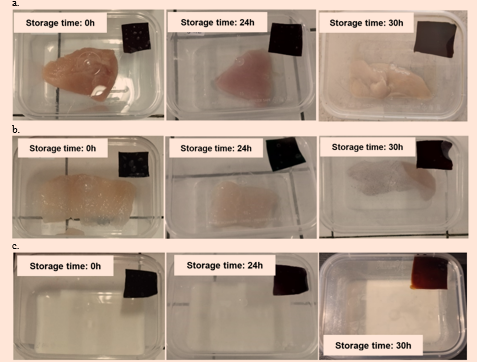
Figure 1: Photograph of (a) chicken meat, (b) fish fillet, and (c) milk after storage for various times in a storage box with a smart label on the top left
Table 2: Measured parameters of the smart label and animal-based foods during storage (mean value of three independent measurements)
Data presented as mean ± Standard Deviation (SD). Different superscript letters in the same row indicate that mean values are significantly different (p<0.05).
CFU=Colony Forming Units
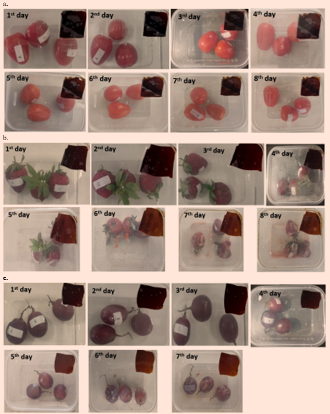
Figure 2: Photograph of (a) tomatoes, (b) strawberries, and (c) grapes after storage for various times in a storage box with a smart label on the top left
Table 3: Measured parameters of the smart label and plant-based foods during storage (average of three measurements)
Full-Text: (5 Views)
Chitosan-Based Colorimetric Smart Label: A Real-Time Indicator for Monitoring Freshness of Animal and Plant-Based Foods
F.W. Mahatmanti 1**1. Chemistry Study Program, Faculty of Mathematics and Natural Sciences, Universitas Negeri Semarang, Indonesia
2. Biology Education Study Program, Faculty of Teacher Training and Education, Universitas Tidar, Indonesia
- Chitosan smart label showed clear pH-responsive color changes.
- Smart label detected spoilage in animal-based foods effectively.
- Label reflected freshness loss in plant-based foods accurately.
- Smart label enabled real-time freshness monitoring of foods.
| Article type Original article |
ABSTRACT
Background: A chitosan-based smart label integrating ginger essential oil and anthocyanins was developed to provide an environmentally friendly, visually detectable means of monitoring food freshness. The label aims to detect quality changes in animal- and plant-based food products during storage through observable color variations. Method: The smart label was prepared by casting a chitosan-based film containing butterfly pea anthocyanin extract and ginger essential oil, then oven-drying. The label performance was evaluated by monitoring changes in color change (ΔE) using an Android-based color detector application, pH was monitored using a pH meter, Total Volatile Basic Nitrogen (TVB-N) was measured using the Conway microdiffusion method; and Total Plate Count (TPC) was assessed using the pour plate method. Experimental data were collected in triplicate, and results are expressed as the mean ± Standard Deviation (SD).
Results: In animal-based foods, label color variations correlated with protein degradation and the release of volatile base compounds. In contrast, distinct color transitions occurred in milk, despite minor pH fluctuations. In plant-based foods, color responses reflected changes in pH, vitamin C degradation, microbial growth, and weight loss. The label exhibited the highest sensitivity to milk for animal-based foods and to grapes for plant-based foods, with ΔE values exceeding 5 and 11, respectively, indicating strong visual detectability. The decomposition of proteins in animal-based foods produced volatile base compounds with a TVB-N value of 1.12-11.76 mg/100 g. The base compounds increased the pH up to 8. In plant-based foods, pH and the number of microorganisms increased during storage, while vitamin C decreased. The pH value increased from 3 to 5, while the number of microorganisms increased from 0.008 to 0.086 Colony Forming Units (CFU)/ml. Vitamin C decreased from 204 to 43 ppm.
Conclusion: The developed chitosan-based smart label effectively monitored freshness deterioration in both animal- and plant-based foods through visible ΔE. The label features a real-time freshness indicator, thanks to its biocompatibility, antimicrobial activity, and stable color response. © 2026, Shahid Sadoughi University of Medical Sciences. This is an open access article under the Creative Commons Attribution 4.0 International License. |
|
| Keywords Anthocyanin Chitosan Colorimetry Food |
||
| Article history Received: 29 Jul 2025 Revised: 20 Jun 2026 Accepted: 25 Jun 2026 |
||
| Abbreviations TPC=Total Plate Count TVB-N=Total Volatile Basic Nitrogen |
To cite: Mahatmanti, F.W., Alauhdin M. and Kusumaningrum, S.B.C. (2026) 'Chitosan-based colorimetric smart label: a real-time indicator for monitoring freshness of animal and plant-based foods', Journal of Food Quality and Hazards Control, 13(2), pp. 80-8.
Introduction
The acidity of spoiled food changes, as reflected in its pH, therefore, pH-based sensor labels can be used to indicate the freshness of food products. Anthocyanins are water-soluble pigments that give fruits, vegetables, and flowers their red, purple, and blue colors. They are pH-sensitive and exhibit a range of colors at varying pH values. Thus, anthocyanins have the potential to be used as materials for making smart labels. They are also biocompatible and have potent antioxidant and antibacterial activities. Nevertheless, anthocyanins are susceptible to degradation, which can alter their chemical and physical properties. To enhance their stability and pH sensitivity, anthocyanins can be encapsulated within a film matrix. A pH-sensitive smart label has been developed by creating a quaternary ammonium salt nano-complex of chitosan-sodium alginate (Zhang et al., 2024). This nano complex was loaded with anthocyanins and incorporated into a polyvinyl alcohol matrix to monitor milk freshness.
Anthocyanins are present in various fruits, flowers, leaves, bark, and grains. Anthocyanins can be extracted from red beet (Ranjbar et al., 2023), purple yam (Li et al., 2023), purple sweet potato (Yana et al., 2021), black rice (Zeng et al., 2023), and butterfly pea flower (Narayanan et al., 2023). They have been widely used to prepare smart labels for food quality monitoring. Among the anthocyanin sources, butterfly pea flower (Clitoria ternatea) extract exhibits the highest pH sensitivity (Rawdkuen et al., 2020), enabling butterfly pea flower anthocyanins to display color changes (ΔE) across various pH levels. These pH-dependent optical properties make anthocyanins from butterfly pea flower extracts a promising biosensor agent for detecting food product spoilage. The stability of anthocyanins from butterfly pea flowers is relatively low; however, they exhibit a strong halochromic response to pH changes, with a characteristic blue color due to their high ternatin content, a polyacylated derivative of delphinidin 3,3′,5′-triglucoside (Channa et al., 2025). Dye extraction from butterfly pea flowers was carried out using a maceration method with ethanol as the solvent, yielding 55% with a total anthocyanin content of 1113.3 mg/L (Mahatmanti et al., 2024).
The carrier polymer used to encapsulate natural pigments in the production of smart labels is generally a natural polymer, such as chitosan. Chitosan is non-toxic, biodegradable, chemically stable, and forms films readily (Li et al., 2023). Chitosan has been recognized by the United States Food and Drug Administration (US-FDA) as a non-toxic and safe material to use (Purohit et al., 2023), leading to its extensive application in food packaging development. Chitosan also exhibits high antioxidant and antibacterial activities (Haghighi et al., 2020). However, chitosan is sensitive to moisture (dos Santos et al., 2017), which can interfere with its function as a matrix or film for dyes. Thus, it cannot accurately display ΔE (Zheng et al., 2023). Therefore, other materials such as wax, lipids, and oils can be added to the chitosan matrix to overcome these drawbacks.
Incorporating essential oils effectively reduces water vapor permeability of bioplastic films and enhances their flexibility (Mukurumbira et al., 2022). An increased essential oil concentration correlates with decreased water absorption capacity and reduced water vapor permeability (Sharma et al., 2021). Essential oil enhanced the antioxidant effects of chitosan (Flórez et al., 2022). Ginger essential oil is rich in bioactive compounds, including phenolic compounds such as gingerols and shogaols, contributing to its antioxidant, anti-inflammatory, and antimicrobial properties. These phenolic compounds can neutralize free radicals, inhibit lipid peroxidation, and enhance the activity of endogenous antioxidant enzymes, making them a promising source of antioxidants (Showkat et al., 2025).
Biofilms composed of chitosan, butterfly flower extract, and ginger oil have been successfully synthesized (Mahatmanti et al., 2024). The biofilms exhibited visually detectable ΔE. The study demonstrated that biofilms have the potential to serve as eco-friendly packaging materials. Furthermore, biofilms can monitor pH levels, which are observable through their color.
Generally, researchers have developed smart labels for single detection, particularly for monitoring animal-based food products (Handayani et al., 2024; Kaewprachu et al., 2024; Khan et al., 2024). Therefore, this study aims to develop a chitosan-based smart label with dual detection capabilities for monitoring the freshness of both animal- and plant-based food products. The smart label is incorporated with anthocyanins and ginger oil to enhance its functionality as a freshness indicator. This research also seeks to address the limited development of chitosan-based films with dual detection capabilities reported to date.
Materials and methods
Materials
The materials used were chitosan (PT. Chi Multiguna, Indonesia), dried butterfly pea flowers purchased from a local store, pH buffer solution (pH 1-12) (Merck, Germany), glycerol for analysis (Merck, Geramany), tween 20 (Merck, Germany), 96% alcohol (Nusa Kimia, Indonesia), ginger oil (Tetesan atsiri, Indonesia), and distilled water (PT. Fuku Maju Sejahtera, Indonesia). Plant-based (grape, strawberry, and tomato) and animal-based (chicken meat, fish fillets, and milk) samples were obtained from local stores.
Preparation of smart labels
The smart label was a film prepared from chitosan, anthocyanin, and ginger essential oil. Two g of chitosan were dissolved in 100 ml of a 2% acetic acid solution (v/v) and stirred at 85 °C. The chitosan solution was added with 1 ml of glycerol, ginger oil, and Tween 20. The temperature was lowered to 65 °C, and then 7.5 ml of butterfly flower extract was added to the mixture as an anthocyanin source. The solution was poured into a petri dish and dried in an oven at 60 °C for approximately 48 h (Mahatmanti et al., 2024).
Smart label application
The smart label films (2 x 2 cm) were attached to the inside of polyethylene box lids containing 25 g of samples (plant- or animal-based). The boxes were then stored at room temperature for 24 and 30 h (for animal-based samples) and 1 to 10 days (for plant-based samples).
The film ∆E was measured using a smartphone with an Android-based color-detection application. The total ΔE of the film was calculated using Equation (1) (Gidado et al., 2024).
The materials used were chitosan (PT. Chi Multiguna, Indonesia), dried butterfly pea flowers purchased from a local store, pH buffer solution (pH 1-12) (Merck, Germany), glycerol for analysis (Merck, Geramany), tween 20 (Merck, Germany), 96% alcohol (Nusa Kimia, Indonesia), ginger oil (Tetesan atsiri, Indonesia), and distilled water (PT. Fuku Maju Sejahtera, Indonesia). Plant-based (grape, strawberry, and tomato) and animal-based (chicken meat, fish fillets, and milk) samples were obtained from local stores.
Preparation of smart labels
The smart label was a film prepared from chitosan, anthocyanin, and ginger essential oil. Two g of chitosan were dissolved in 100 ml of a 2% acetic acid solution (v/v) and stirred at 85 °C. The chitosan solution was added with 1 ml of glycerol, ginger oil, and Tween 20. The temperature was lowered to 65 °C, and then 7.5 ml of butterfly flower extract was added to the mixture as an anthocyanin source. The solution was poured into a petri dish and dried in an oven at 60 °C for approximately 48 h (Mahatmanti et al., 2024).
Smart label application
The smart label films (2 x 2 cm) were attached to the inside of polyethylene box lids containing 25 g of samples (plant- or animal-based). The boxes were then stored at room temperature for 24 and 30 h (for animal-based samples) and 1 to 10 days (for plant-based samples).
The film ∆E was measured using a smartphone with an Android-based color-detection application. The total ΔE of the film was calculated using Equation (1) (Gidado et al., 2024).
(1)Where,
ΔL* = L* sample - L* standard
Δa* = a* sample - a* standard
Δb* = b* sample - b* standard
L* standard = 99.34; a* standard = -0.26; and b* standard = 1.42 according to Gidado et al., (2024).
Determination of TPC
The quantification of microorganisms was conducted by measuring TPC using the pour plate method. Glassware, including petri dishes, test tubes, and pipettes, was sterilized in an oven at 80 °C for 2 h. Nutrient Agar (NA) media was prepared by dissolving 28 g of Nutrient Agar (NA) in 1,000 ml of distilled water and sterilized in an autoclave at 121 °C and 1 atm for 15 min. After sterilization, the media temperature was maintained in a water bath at 45-55 °C to prevent freezing.
Determination of TVB-N for animal-based products
TVB-N measurements in animal-based products were performed according to the method described in previous work (Handayani et al., 2024). A 5 g sample was extracted with 7.5% trichloroacetic acid (TCA) and filtered through Whatman No. 2 paper. One ml of the filtrate was reacted with boric acid, Conway indicator, and saturated K2CO3 solution in a sealed Conway cup, then incubated at 35 °C for 2 h. The remaining boric acid solution was titrated with HCl, and the TVB-N value was calculated from the titration data using Equation (2).
ΔL* = L* sample - L* standard
Δa* = a* sample - a* standard
Δb* = b* sample - b* standard
L* standard = 99.34; a* standard = -0.26; and b* standard = 1.42 according to Gidado et al., (2024).
Determination of TPC
The quantification of microorganisms was conducted by measuring TPC using the pour plate method. Glassware, including petri dishes, test tubes, and pipettes, was sterilized in an oven at 80 °C for 2 h. Nutrient Agar (NA) media was prepared by dissolving 28 g of Nutrient Agar (NA) in 1,000 ml of distilled water and sterilized in an autoclave at 121 °C and 1 atm for 15 min. After sterilization, the media temperature was maintained in a water bath at 45-55 °C to prevent freezing.
Determination of TVB-N for animal-based products
TVB-N measurements in animal-based products were performed according to the method described in previous work (Handayani et al., 2024). A 5 g sample was extracted with 7.5% trichloroacetic acid (TCA) and filtered through Whatman No. 2 paper. One ml of the filtrate was reacted with boric acid, Conway indicator, and saturated K2CO3 solution in a sealed Conway cup, then incubated at 35 °C for 2 h. The remaining boric acid solution was titrated with HCl, and the TVB-N value was calculated from the titration data using Equation (2).
Weight loss measurement for fruit-based products
Weight loss was measured gravimetrically by comparing the weight before and after storage. Weight loss during storage was calculated using Equation (3).
(3)Determination of vitamin C for fruit-based products
One gram of the sample was weighed, dissolved in distilled water, and filtered and 0.05 ml of filtrate was diluted to 10 ml with distilled water. Furthermore, absorbance was measured using a UV-Vis spectrophotometer (FLUOstar Omega, BMG Labtech) at 265 nm. The measurement was repeated three times. To calculate the concentration of vitamin C, a standard curve was prepared for ascorbic acid solutions at various concentrations.
Statistical analysis
The measurement data were analyzed using one-way analysis of variance (ANOVA) to determine differences in mean values among sample groups at 5% significance level (α = 0.05). Prior to the analysis, the data were tested for normality and homogeneity of variance. When ANOVA indicated a statistically significant difference (p<0.05), Tukey's HSD post hoc test was performed to identify pairwise differences among sample groups. The results are presented as the mean ± Standard Deviation (SD).
Results and discussion
A chitosan-based smart label was successfully prepared by incorporating ginger oil and anthocyanins into chitosan. According to the previous work (Mahatmanti et al., 2024), this label is in film form with a thickness of 0.45 mm, a tensile strength of 0.08 MPa, and an elongation of 168%. The films also exhibit antioxidant and antimicrobial activity when tested against S. aureus and E. coli. Moreover, the smart labels exhibited a ΔE value exceeding 5 across the pH range of 1 to 12. The results demonstrate that ΔE are discernible to the naked eye. The film characteristics are presented in Table 1. The films were then applied as smart labels to monitor the freshness of animal- and plant-based foods during storage.
Smart label application on animal-based food
Smart label application on animal-based food
Monitoring of smart label application on animal-based food (Figure 1) was performed by examining TVB-N, number of microorganisms, and pH of the samples. The data were combined with ΔE in the label. The results are presented in Table 2.
Table 1: Characteristics of a chitosan-based film used for a smart label (Mahatmanti et al., 2024)
| Characteristics | Result* |
| Mechanical |
| Thickness | 0.45 mm |
| Tensile strength | 0.08 MPa |
| Elongation | 168% |
| Antioxidant | IC50: 12.45 mg/L (very strong) |
| Antimicrobial |
| S. aureus | ZOI: 6.88 (moderate) |
| E. coli | ZOI: 1.70 (weak) |
| Total ΔE (pH range: 1-12) |
ΔE: 5.5 – 15.3 |
Figure 1: Photograph of (a) chicken meat, (b) fish fillet, and (c) milk after storage for various times in a storage box with a smart label on the top left
Table 2: Measured parameters of the smart label and animal-based foods during storage (mean value of three independent measurements)
| Parameter | Time (hour) | Chicken meat | Fish fillet | Milk |
| Color difference (△E) of the label | 0 | 0 | 0 | 0 |
| 24 | 7.35±0.02 ᵃ | 10.23±0.14 ᵃ | 6.38±0.26 ᵃ | |
| 30 | 4.81±0.05 ᵇ | 1.23±0.14 ᵇ | 4.38±0.17 ᵇ | |
| TVB-N value (mg/100 g) | 0 | 1.12±0.06 c | 2.24±0.12 c | 1.96±0.18 b |
| 24 | 7±0.16 b | 7.84±0.12 b | 2.24±0.12 b | |
| 30 | 10.08±0.05 c | 11.76±0.56 a | 3.36±0.56 a | |
| pH | 0 | 6 | 6 | 6 |
| 24 | 7 | 7 | 6 | |
| 30 | 7 | 8 | 6 | |
| Number of microorganisms (CFU/ml) x 103 | 0 | 69±0.5 c | 14.40±0.50 ᶜ | 34±1.5 a |
| 24 | 93.5±0.5 b | 17.80±0.50 ᵇ | 65±1.5 b | |
| 30 | 120±0.6 a | 23.75±0.05 ᵃ | 99±0.85 c |
CFU=Colony Forming Units
Variations in ΔE values of smart labels are associated with changes in pH, TVB-N, and the total number of microorganisms in samples during storage. While stored, volatile base compounds are continuously released from chicken meat, fish fillets, and milk, accumulating to higher concentrations in the upper space of the packaging box. The smart label absorbs these chemicals, causing ΔE as pH varies.
TVB-N is commonly used to assess the freshness level of protein-rich food products. As microorganisms and enzymes continue to decompose proteins, the products are released into the environment, including ammonia (NH3) and other nitrogen compounds. These nitrogen compounds then combine with other food components to form TVB-N. TVB-N refers to low molecular weight substances and alkaline compounds, especially trimethylamine (TMA), dimethylamine (DMA), and NH3. These produce unpleasant flavors during degradation. TVB-N levels serve as a standard metric for assessing the freshness or spoilage of animal-based food products during storage (Handayani et al., 2024).
The spoilage mechanisms for each food product differ, thus impacting label performance. In milk, spoilage is caused by the combined effects of the decomposition reactions of lactose, fat, and protein. Lactose is fermented at room temperature by lactic acid bacteria, resulting in milk becoming acidic (Li et al., 2025; Zhang et al., 2024). Meanwhile, proteins in milk produce volatile base compounds that increase pH level. Meanwhile, the decomposition of proteins in fish fillets, chicken, and milk produces volatile base compounds, a major contributor to TVB-N, which increases pH level.
The freshness of milk can be assessed by measuring its pH or acidity. The pH of fresh milk is between 6.6 and 6.8, while the pH of spoiled milk is between 4.5 and 5.5. The initial pH of fresh milk was 6, and the pH remained stable throughout the 30 h storage period. As mentioned earlier, the metabolism of lactose produces lactic acid, which in turn lowers pH level. On the other hand, the protein in milk decomposes and produces volatile bases that increase pH level. Thus, the total pH level is relatively unchanged. The color of the smart label transitioned from dark brown to reddish brown, indicated by an increase in a* value, approaching red. The ΔE value of 12.495 indicates that the naked eye easily observes the color change of the smart label. This indicates that the smart label can monitor milk freshness.
The performance of the developed anthocyanin-based smart label was comparable to that reported in previous studies, demonstrating its capability to visually monitor the freshness of various animal-based foods through pH-dependent ΔE. For chicken meat and fish fillet, the present study showed a gradual color transition from brown to dark brown during storage, accompanied by increases in pH and TVB-N values, indicating the accumulation of volatile basic nitrogen compounds associated with microbial spoilage. Similarly, previous studies have demonstrated that anthocyanin-based indicators effectively respond to freshness deterioration, although the observed color transitions varied across food matrices and indicator formulations. Sani et al. (2021) reported a dark grey-to-pink transition in milk and a red-to-pale pink transition in fish, whereas Zhang et al. (2024) observed a purple-to-purplish-red change during milk storage. In contrast, Wu et al. (2023) reported a pink-to-yellowish-brown transition in chicken meat during refrigerated storage. These differences in color response are likely attributable to variations in the anthocyanin source, polymer matrix composition, fabrication method, storage temperature, and the chemical environment surrounding the pigments, all of which affect anthocyanin stability and chromatic behavior. Despite these differences, all studies demonstrate that anthocyanin-based smart labels can serve as reliable visual indicators of food freshness by responding to physicochemical changes that occur during spoilage. Notably, unlike previous studies that generally evaluated a single food commodity, the smart label developed in this study was successfully applied to three different animal-based food products (chicken meat, fish fillet, and milk), demonstrating its broader applicability as a freshness indicator.
Smart label application on plant-based food
Plant-based foods, including fruits and vegetables, are important in daily diets. They are rich in essential vitamins, inorganic salts, biological enzymes, and dietary fiber, all of which benefit human health. Fruits and vegetables are vulnerable to mechanical, physical, chemical, and microbiological deterioration during post-harvest storage and transportation. This can decrease the quality of fruits and vegetables. In this instance, the quality of fruits and vegetables must be closely monitored to prevent losses. Here, smart labels can be used to monitor and provide information regarding food quality. The application of chitosan-based smart labels for monitoring the freshness of fruits and vegetables (Figure 2) was evaluated, and the results are presented in Table 3.
TVB-N is commonly used to assess the freshness level of protein-rich food products. As microorganisms and enzymes continue to decompose proteins, the products are released into the environment, including ammonia (NH3) and other nitrogen compounds. These nitrogen compounds then combine with other food components to form TVB-N. TVB-N refers to low molecular weight substances and alkaline compounds, especially trimethylamine (TMA), dimethylamine (DMA), and NH3. These produce unpleasant flavors during degradation. TVB-N levels serve as a standard metric for assessing the freshness or spoilage of animal-based food products during storage (Handayani et al., 2024).
The spoilage mechanisms for each food product differ, thus impacting label performance. In milk, spoilage is caused by the combined effects of the decomposition reactions of lactose, fat, and protein. Lactose is fermented at room temperature by lactic acid bacteria, resulting in milk becoming acidic (Li et al., 2025; Zhang et al., 2024). Meanwhile, proteins in milk produce volatile base compounds that increase pH level. Meanwhile, the decomposition of proteins in fish fillets, chicken, and milk produces volatile base compounds, a major contributor to TVB-N, which increases pH level.
The freshness of milk can be assessed by measuring its pH or acidity. The pH of fresh milk is between 6.6 and 6.8, while the pH of spoiled milk is between 4.5 and 5.5. The initial pH of fresh milk was 6, and the pH remained stable throughout the 30 h storage period. As mentioned earlier, the metabolism of lactose produces lactic acid, which in turn lowers pH level. On the other hand, the protein in milk decomposes and produces volatile bases that increase pH level. Thus, the total pH level is relatively unchanged. The color of the smart label transitioned from dark brown to reddish brown, indicated by an increase in a* value, approaching red. The ΔE value of 12.495 indicates that the naked eye easily observes the color change of the smart label. This indicates that the smart label can monitor milk freshness.
The performance of the developed anthocyanin-based smart label was comparable to that reported in previous studies, demonstrating its capability to visually monitor the freshness of various animal-based foods through pH-dependent ΔE. For chicken meat and fish fillet, the present study showed a gradual color transition from brown to dark brown during storage, accompanied by increases in pH and TVB-N values, indicating the accumulation of volatile basic nitrogen compounds associated with microbial spoilage. Similarly, previous studies have demonstrated that anthocyanin-based indicators effectively respond to freshness deterioration, although the observed color transitions varied across food matrices and indicator formulations. Sani et al. (2021) reported a dark grey-to-pink transition in milk and a red-to-pale pink transition in fish, whereas Zhang et al. (2024) observed a purple-to-purplish-red change during milk storage. In contrast, Wu et al. (2023) reported a pink-to-yellowish-brown transition in chicken meat during refrigerated storage. These differences in color response are likely attributable to variations in the anthocyanin source, polymer matrix composition, fabrication method, storage temperature, and the chemical environment surrounding the pigments, all of which affect anthocyanin stability and chromatic behavior. Despite these differences, all studies demonstrate that anthocyanin-based smart labels can serve as reliable visual indicators of food freshness by responding to physicochemical changes that occur during spoilage. Notably, unlike previous studies that generally evaluated a single food commodity, the smart label developed in this study was successfully applied to three different animal-based food products (chicken meat, fish fillet, and milk), demonstrating its broader applicability as a freshness indicator.
Smart label application on plant-based food
Plant-based foods, including fruits and vegetables, are important in daily diets. They are rich in essential vitamins, inorganic salts, biological enzymes, and dietary fiber, all of which benefit human health. Fruits and vegetables are vulnerable to mechanical, physical, chemical, and microbiological deterioration during post-harvest storage and transportation. This can decrease the quality of fruits and vegetables. In this instance, the quality of fruits and vegetables must be closely monitored to prevent losses. Here, smart labels can be used to monitor and provide information regarding food quality. The application of chitosan-based smart labels for monitoring the freshness of fruits and vegetables (Figure 2) was evaluated, and the results are presented in Table 3.
Figure 2: Photograph of (a) tomatoes, (b) strawberries, and (c) grapes after storage for various times in a storage box with a smart label on the top left
Table 3: Measured parameters of the smart label and plant-based foods during storage (average of three measurements)
| Parameter | Time (day) | Tomato | Strawberry | Grape |
| The label △E | 0 | 0 | 0 | 0 |
| 3 | 19.58±0.62 a | 18.39±0.36 a | 15.34±0.21 a | |
| 7 | 9.21±0.42 b | 7.54±0.52 b | 11.44±0.32 b | |
| Weight (g) of food | 0 | 25.26±0.12 a | 9.92±0.3 a | 7.8±0.5 a |
| 3 | 23.45±0.23 b | 7.9±0.6 b | 6.5±0.1 b | |
| 7 | 21.81±0.47 c | n.a | 5.4±0.1 c | |
| pH | 0 | 4 | 3 | 4 |
| 3 | 5 | 4 | 4 | |
| 7 | 5 | 5 | 5 | |
| Number of microorganisms (CFU/ml) x 103 | 0 | 13±0.5 c | 69±0.5 b | 8±0.5 c |
| 3 | 15±0.1 b | 86±0.5 a | 20±0.5 b | |
| 7 | 21±0.1 a | n.a | 32±0.5 a | |
| Vitamin C (ppm) | 0 | 158±1.9 a | 204±0.42 a | 79.96±0.10 ᵃ |
| 3 | 152±2.25 b | 188±4.7 b | 59.85±0.45 ᵇ | |
| 7 | 149±4.19 b | n.a | 42.64±1.12 ᶜ |
Data presented as mean ± Standard Deviation (SD). Different superscript letters in the same row indicate that the means are significantly different (p<0.05).
CFU=Colony Forming Units; n.a=not availableThe results indicated that the condition of tomatoes, grapes, and strawberries varied with storage duration. The fruit skin turned reddish-brown, grew wrinkled, and its texture softened, particularly after 7 days of storage. On the seventh day, the strawberries were infested with mold and decomposed. Strawberries, which have a thin, more permeable peel, are susceptible to water loss, leading to changes in texture, reduced freshness, wrinkling, or even rotting, making the fruit unfit for consumption.
The optimal shelf life of tomatoes and grapes, determined by visual inspection, is 7 days at room temperature, whereas strawberries have a shorter shelf life of 3 days. This aligns with reduced weight loss, as the percentage of weight loss in tomatoes and grapes is lower, and the physical alterations are less pronounced than in strawberries. Grapes and tomatoes have a peel that protects the fruit during storage and inhibits water loss, whereas strawberries have none. Tomatoes also have a peel, but their water content is higher than that of grapes, making them more susceptible to spoilage. Weight loss is a key measure of fruit quality, primarily associated with water loss, and depends on the relative humidity gradient between fruit and its environment.
The gradual increase in pH level during storage can be attributed to enzymatic processes and the natural aging of the fruit, which usually results in a decrease in acidity or an increase in pH. The increase in pH can be delayed, and the enzymatic process can be reduced using natural preservatives. Therefore, vitamin C (ascorbic acid) content can be a parameter for assessing the freshness and overall quality of fruits and vegetables. The decrease in ascorbic acid levels in vegetables and fruits is primarily triggered by increased oxygen levels or elevated storage temperatures (Chen et al., 2023).
Total microbial analysis using the TPC method aims to determine the number of microbial growths in samples during storage. According to the Indonesian national standard (SNI 01-2733.1-2006), the number of TPC in food ingredients is 5×10⁵ colonies/ml. Therefore, a 7-day storage period is recommended for tomatoes and grapes, and a 3-day storage period for strawberries, indicating that they remain safe for consumption.
At room temperature (25 ◦C), ΔE value changes with increasing storage time. In all samples tested, ΔE value of grapes changed significantly from brown (△E = 8.78) to red (△E = 11.44) compared to tomatoes and strawberries. This shows that the film is more sensitive to monitoring grape freshness. Changes in ΔE value of smart labels are primarily related to pH, but are also indirectly related to vitamin C levels and the number of microorganisms. Higher pH values decrease vitamin C (ascorbic acid) levels, and increasing pH level to 7 also increases the number of microorganisms. The results indicated that the smart label exhibited a favorable response and possessed enhanced potential for application.
During storage, the label changed from brown to dark brown for tomatoes and from dark brown to reddish brown for strawberries and grapes, corresponding to increases in microbial populations and changes in acidity. These findings are consistent with previous studies demonstrating that anthocyanin-based indicators effectively monitor quality deterioration in fresh produce through pH-responsive ΔE, although the specific color transitions differ among studies. Yi et al. (2023) reported a pink-to-reddish-brown color transition during mushroom storage, while Tang et al. (2025) observed a dark purple-to-light yellow-purple transition for strawberry freshness monitoring. The differences in color response are likely related to variations in the anthocyanin source, film composition, sensing mechanism, and the physicochemical characteristics of different plant matrices. Moreover, unlike mushrooms, which exhibit relatively small pH changes during storage, fruits such as strawberries, tomatoes, and grapes undergo more complex biochemical changes involving organic acid metabolism and microbial proliferation, which can affect the microenvironment surrounding the indicator. Despite these variations, the present results agree with previous reports in confirming that anthocyanin-based smart labels provide an effective, non-destructive, and visual approach for monitoring the freshness of plant-based foods. Furthermore, the smart label developed in this study was successfully applied to three different fruit commodities using a single indicator formulation, highlighting its broader applicability compared to previous studies that generally focused on a single type of product.
The gradual increase in pH level during storage can be attributed to enzymatic processes and the natural aging of the fruit, which usually results in a decrease in acidity or an increase in pH. The increase in pH can be delayed, and the enzymatic process can be reduced using natural preservatives. Therefore, vitamin C (ascorbic acid) content can be a parameter for assessing the freshness and overall quality of fruits and vegetables. The decrease in ascorbic acid levels in vegetables and fruits is primarily triggered by increased oxygen levels or elevated storage temperatures (Chen et al., 2023).
Total microbial analysis using the TPC method aims to determine the number of microbial growths in samples during storage. According to the Indonesian national standard (SNI 01-2733.1-2006), the number of TPC in food ingredients is 5×10⁵ colonies/ml. Therefore, a 7-day storage period is recommended for tomatoes and grapes, and a 3-day storage period for strawberries, indicating that they remain safe for consumption.
At room temperature (25 ◦C), ΔE value changes with increasing storage time. In all samples tested, ΔE value of grapes changed significantly from brown (△E = 8.78) to red (△E = 11.44) compared to tomatoes and strawberries. This shows that the film is more sensitive to monitoring grape freshness. Changes in ΔE value of smart labels are primarily related to pH, but are also indirectly related to vitamin C levels and the number of microorganisms. Higher pH values decrease vitamin C (ascorbic acid) levels, and increasing pH level to 7 also increases the number of microorganisms. The results indicated that the smart label exhibited a favorable response and possessed enhanced potential for application.
During storage, the label changed from brown to dark brown for tomatoes and from dark brown to reddish brown for strawberries and grapes, corresponding to increases in microbial populations and changes in acidity. These findings are consistent with previous studies demonstrating that anthocyanin-based indicators effectively monitor quality deterioration in fresh produce through pH-responsive ΔE, although the specific color transitions differ among studies. Yi et al. (2023) reported a pink-to-reddish-brown color transition during mushroom storage, while Tang et al. (2025) observed a dark purple-to-light yellow-purple transition for strawberry freshness monitoring. The differences in color response are likely related to variations in the anthocyanin source, film composition, sensing mechanism, and the physicochemical characteristics of different plant matrices. Moreover, unlike mushrooms, which exhibit relatively small pH changes during storage, fruits such as strawberries, tomatoes, and grapes undergo more complex biochemical changes involving organic acid metabolism and microbial proliferation, which can affect the microenvironment surrounding the indicator. Despite these variations, the present results agree with previous reports in confirming that anthocyanin-based smart labels provide an effective, non-destructive, and visual approach for monitoring the freshness of plant-based foods. Furthermore, the smart label developed in this study was successfully applied to three different fruit commodities using a single indicator formulation, highlighting its broader applicability compared to previous studies that generally focused on a single type of product.
Conclusion
The chitosan-based smart label containing ginger oil and anthocyanins demonstrated strong efficacy in monitoring the freshness of animal- and plant-based food products. The label presented obvious ΔE (ΔE > 5) with pH, TVB-N, and microbial growth during storage. In the case of foods containing animal-based materials, such as chicken, fish, and milk, the label proved effective for monitoring freshness deterioration caused by protein degradation, especially through the release of volatile base compounds. Similarly, for plant-based foods like tomatoes, grapes, and strawberries, the label provided a clear representation of changes in freshness caused by pH, microbial growth, vitamin C degradation, and weight loss. Among the samples tested, the label was more sensitive to grapes and milk. In general, the developed chitosan-based smart label demonstrates strong feasibility as an eco-friendly, visual freshness indicator for real-time freshness monitoring in food packaging.
Author contributions
F.W.M contributed to the conceptualization, methodology, writing, and finalization of the manuscript draft; M.A contributed to data collection and analysis, writing, and finalization of the manuscript draft; S.B.C.K carried out data collection, writing, and visualization. All authors read and approved the final manuscript.
Acknowledgements
We thank the Directorate General of Higher Education, Research and Technology, Ministry of Education, Culture, Research and Technology Indonesia, for funding through the DPA of the Institute for Research and Community Service (LPPM) of Universitas Negeri Semarang.
Conflicts of interest
The authors declare no conflicts of interest.
Funding
This work was supported by the Ministry of Education, Culture, Research, and Technology of the Republic of Indonesia (Grant No. DPA: 023.17.2.690645/2024.10) received by Fransisca Widhi Mahatmanti.
Ethical consideration
Not applicable.
References
Bhowmik, S., Agyei, D. and Ali, A. (2022) 'Bioactive chitosan and essential oils in sustainable active food packaging: recent trends, mechanisms, and applications', Food Packaging and Shelf Life, 34, p. 100962. Available at: https://doi.org/10.1016/j.fpsl.2022.100962
Channa, I.A., Ashfaq, J., Wasti, M., Memon, A.G., Hasan, M., Shar, M.A., AlHazaa, A. and Tiliakos, A. (2025) 'pH-responsive halochromic films based on carboxymethyl cellulose infused with anthocyanin or curcumin dye extracts for smart packaging applications', Hybrid Advances, 10, p. 100476. Available at: https://doi.org/10.1016/j.hybadv.2025.100476
Chen, K., Tian, R., Xu, G., Wu, K., Liu, Y. and Jiang, F. (2023) 'Characterizations of konjac glucomannan/curdlan edible coatings and the preservation effect on cherry tomatoes', International Journal of Biological Macromolecules, 232, p. 123359. Available at: https://doi.org/10.1016/j.ijbiomac.2023.123359
dos Santos, F.K.G., Silva, K.N. de O., Xavier, T.D.N., Leite, R.H. de L. and Aroucha, E.M.M. (2017) 'Effect of the addition of carnauba wax on physicochemical properties of chitosan films', Materials Research, 20, pp. 485–491. Available at: https://doi.org/10.1590/1980-5373-MR-2016-1010
Flórez, M., Guerra-Rodríguez, E., Cazón, P. and Vázquez, M. (2022) 'Chitosan for food packaging: recent advances in active and intelligent films', Food Hydrocolloids, 124, p. 107328. Available at: https://doi.org/10.1016/j.foodhyd.2021.107328
Gidado, M.J., Gunny, A.A.N., Gopinath, S.C.B., Ali, A., Wongs-Aree, C. and Salleh, N.H.M. (2024) 'Challenges of postharvest water loss in fruits: mechanisms, influencing factors, and effective control strategies – a comprehensive review', Journal of Agriculture and Food Research, 17, p. 101249. Available at: https://doi.org/10.1016/j.jafr.2024.101249
Haghighi, H., Licciardello, F., Fava, P., Siesler, H.W. and Pulvirenti, A. (2020) 'Recent advances on chitosan-based films for sustainable food packaging applications', Food Packaging and Shelf Life, 26, p. 100551. Available at: https://doi.org/10.1016/j.fpsl.2020.100551
Handayani, L., Aprilia, S., Arahman, N. and Bilad, M.R. (2024) 'Identification of the anthocyanin profile from butterfly pea (Clitoria ternatea L.) flowers under varying extraction conditions: evaluating its potential as a natural blue food colorant and its application as a colorimetric indicator', South African Journal of Chemical Engineering, 49, pp. 151–161. Available at: https://doi.org/10.1016/j.sajce.2024.04.008
Kaewprachu, P., Jaisan, C., Rawdkuen, S. and Osako, K. (2024) 'Colorimetric indicator films based on carboxymethyl cellulose and anthocyanins as a visual indicator for shrimp freshness tracking', Heliyon, 10(11), p. e31527. Available at: https://doi.org/10.1016/j.heliyon.2024.e31527
Khan, J., An, H., Alam, S., Kalsoom, S., Huan Chen, S., Ayano Begeno, T. and Du, Z. (2024) 'Smart colorimetric indicator films prepared from chitosan and polyvinyl alcohol with high mechanical strength and hydrophobic properties for monitoring shrimp freshness', Food Chemistry, 445, p. 138784. Available at: https://doi.org/10.1016/j.foodchem.2024.138784
Li, N., Si, B., Zhao, X., Zhang, Y., Qian, W., Wang, M., Yang, J., Lu, G., Zhao, S., Zheng, N., Li, H. and Wang, J. (2025) 'Application of biogenic amines in milk freshness assessment: a comparative study with traditional quality parameters', LWT, 233, p. 118521. Available at: https://doi.org/10.1016/j.lwt.2025.118521
Li, Q., Cai, P., Xiao, H. and Pan, Y. (2023) 'pH-responsive color indicator films based on chitosan and purple yam extract for in-situ monitoring food freshness', Food Bioscience, 56, p. 103373. Available at: https://doi.org/10.1016/j.fbio.2023.103373
Mahatmanti, F.W., Alauhdin, M. and Kusumaningrum, S.B.C. (2024) 'Smart and green packaging made from chitosan-based biofilm with the addition of ginger oil and anthocyanins from butterfly pea flower extract (Clitoria ternatea L)', Jurnal Kimia Sains dan Aplikasi, 27(2), pp. 53-63. Available at: https://doi.org/10.14710/Jksa.27.2.53-63
Mukurumbira, A.R., Shellie, R.A., Keast, R., Palombo, E.A. and Jadhav, S.R. (2022) 'Encapsulation of essential oils and their application in antimicrobial active packaging', Food Control, 136, p. 108883. Available at: https://doi.org/10.1016/j.foodcont.2022.108883
Narayanan, G.P., Radhakrishnan, P., Baiju, P. and S, A.M. (2023) 'Fabrication of butterfly pea flower anthocyanin-incorporated colorimetric indicator film based on gelatin/pectin for monitoring fish freshness', Food Hydrocolloids for Health, 4, p. 100159. Available at: https://doi.org/10.1016/j.fhfh.2023.100159
Purohit, S.D., Priyadarshi, R., Bhaskar, R. and Han, S.S. (2023) 'Chitosan-based multifunctional films reinforced with cerium oxide nanoparticles for food packaging applications', Food Hydrocolloids, 143, p. 108910. Available at: https://doi.org/10.1016/j.foodhyd.2023.108910
Ranjbar, M., Azizi Tabrizzad, M.H., Asadi, G. and Ahari, H. (2023) 'Investigating the microbial properties of sodium alginate/chitosan edible film containing red beetroot anthocyanin extract for smart packaging in chicken fillet as a pH indicator', Heliyon, 9(8), p. e18879. Available at: https://doi.org/10.1016/j.heliyon.2023.e18879
Rawdkuen, S., Faseha, A., Benjakul, S., and Kaewprachu, P. (2020) 'Application of anthocyanin as a color indicator in gelatin films', Food Biosci., 36, p. 100603. Available at: https://doi.org/10.1016/j.fbio.2020.100603
Sani, M.A., Tavassoli, M., Hamishehkar, H. and McClements, D.J. (2021) 'Carbohydrate-based films containing pH-sensitive red barberry anthocyanins: application as biodegradable smart food packaging materials', Carbohydrate Polymers, 255, p. 117488. Available at: https://doi.org/10.1016/j.carbpol.2020.117488
Sharma, S., Barkauskaite, S., Jaiswal, A.K. and Jaiswal, S. (2021) 'Essential oils as additives in active food packaging', Food Chemistry, 343, p. 128403. Available at: https://doi.org/10.1016/j.foodchem.2020.128403
Showkat, S., Anjum, N., Ayaz, Q., Mustafa, S., Malik, A.R., Beigh, M.A., Banday, N., Gulzar, B. and Wani, S.M. (2025) 'Enhancing shelflife of plum fruit by chitosan-based nanoemulsion coating incorporated with ginger essential oil', Applied Food Research, 5(1), p. 100768. Available at: https://doi.org/10.1016/j.afres.2025.100768
Tang, T., Zhang, M., Jia, H., Adhikari, B., Guo, Z. (2025) 'Real-time freshness monitoring of fruits and vegetables integrating 3D-printed alginate-based colorimetric sensors with deep convolutional neural networks', Chemical Engineering Journal, 520, 166387. Available at: https://doi.org/10.1016/j.cej.2025.166387
Wu, Y., Gao, Y. and Li, C. (2023) 'Preparation and characterization of smart indicator films based on gellan gum/modified black rice anthocyanin/curcumin for improving the stability of natural anthocyanins', International Journal of Biological Macromolecules, 253, 127436. Available at: https://doi.org/10.1016/j.ijbiomac.2023.127436
Yana, L., Kaixuan, W., Beihai, W. and Xuezhong, L. (2021) 'Colorimetric indicator based on purple tomato anthocyanins and chitosan for application in intelligent packaging', International Journal of Biological Macromolecules, 174, pp. 370–376. Available at: https://doi.org/10.1016/j.ijbiomac.2021.01.182
Yi, F., Hou, F, Zhan, S., Song, L., Zhang, R., Han, X., Sun, X. and Liu, Z. (2023) 'Preparation, characterization and application of pH-responsive smart film based on chitosan/zein and red radish anthocyanin', International Journal of Biological Macromolecules, 253, 127037. Available at: https://doi.org/10.1016/j.ijbiomac.2023.127037
Zeng, F., Ye, Y., Liu, J. and Fei, P. (2023) 'Intelligent pH indicator composite film based on pectin/chitosan incorporated with black rice anthocyanins for meat freshness monitoring', Food Chemistry: X, 17, p. 100531. Available at: https://doi.org/10.1016/j.fochx.2022.100531
Zhang, Q., Lin, G., Wang, H., Jin, M.C., Dang, H., Zhang, J., Guo, R., Yan, H., Niu, B. and Wang, H. (2024) 'Development of smart packaging film incorporated with sodium alginate-chitosan quaternary ammonium salt nanocomplexes encapsulating anthocyanins for monitoring milk freshness', International Journal of Biological Macromolecules, 263, p. 130336. Available at: https://doi.org/10.1016/j.ijbiomac.2024.130336
Zheng, T., Tang, P. and Li, G. (2023) 'Development of a pH-sensitive film based on collagen/chitosan/ZnO nanoparticles and mulberry extract for pork freshness monitoring', Food Chemistry, 402, p. 134428. Available at: https://doi.org/10.1016/j.foodchem.2022.134428
Channa, I.A., Ashfaq, J., Wasti, M., Memon, A.G., Hasan, M., Shar, M.A., AlHazaa, A. and Tiliakos, A. (2025) 'pH-responsive halochromic films based on carboxymethyl cellulose infused with anthocyanin or curcumin dye extracts for smart packaging applications', Hybrid Advances, 10, p. 100476. Available at: https://doi.org/10.1016/j.hybadv.2025.100476
Chen, K., Tian, R., Xu, G., Wu, K., Liu, Y. and Jiang, F. (2023) 'Characterizations of konjac glucomannan/curdlan edible coatings and the preservation effect on cherry tomatoes', International Journal of Biological Macromolecules, 232, p. 123359. Available at: https://doi.org/10.1016/j.ijbiomac.2023.123359
dos Santos, F.K.G., Silva, K.N. de O., Xavier, T.D.N., Leite, R.H. de L. and Aroucha, E.M.M. (2017) 'Effect of the addition of carnauba wax on physicochemical properties of chitosan films', Materials Research, 20, pp. 485–491. Available at: https://doi.org/10.1590/1980-5373-MR-2016-1010
Flórez, M., Guerra-Rodríguez, E., Cazón, P. and Vázquez, M. (2022) 'Chitosan for food packaging: recent advances in active and intelligent films', Food Hydrocolloids, 124, p. 107328. Available at: https://doi.org/10.1016/j.foodhyd.2021.107328
Gidado, M.J., Gunny, A.A.N., Gopinath, S.C.B., Ali, A., Wongs-Aree, C. and Salleh, N.H.M. (2024) 'Challenges of postharvest water loss in fruits: mechanisms, influencing factors, and effective control strategies – a comprehensive review', Journal of Agriculture and Food Research, 17, p. 101249. Available at: https://doi.org/10.1016/j.jafr.2024.101249
Haghighi, H., Licciardello, F., Fava, P., Siesler, H.W. and Pulvirenti, A. (2020) 'Recent advances on chitosan-based films for sustainable food packaging applications', Food Packaging and Shelf Life, 26, p. 100551. Available at: https://doi.org/10.1016/j.fpsl.2020.100551
Handayani, L., Aprilia, S., Arahman, N. and Bilad, M.R. (2024) 'Identification of the anthocyanin profile from butterfly pea (Clitoria ternatea L.) flowers under varying extraction conditions: evaluating its potential as a natural blue food colorant and its application as a colorimetric indicator', South African Journal of Chemical Engineering, 49, pp. 151–161. Available at: https://doi.org/10.1016/j.sajce.2024.04.008
Kaewprachu, P., Jaisan, C., Rawdkuen, S. and Osako, K. (2024) 'Colorimetric indicator films based on carboxymethyl cellulose and anthocyanins as a visual indicator for shrimp freshness tracking', Heliyon, 10(11), p. e31527. Available at: https://doi.org/10.1016/j.heliyon.2024.e31527
Khan, J., An, H., Alam, S., Kalsoom, S., Huan Chen, S., Ayano Begeno, T. and Du, Z. (2024) 'Smart colorimetric indicator films prepared from chitosan and polyvinyl alcohol with high mechanical strength and hydrophobic properties for monitoring shrimp freshness', Food Chemistry, 445, p. 138784. Available at: https://doi.org/10.1016/j.foodchem.2024.138784
Li, N., Si, B., Zhao, X., Zhang, Y., Qian, W., Wang, M., Yang, J., Lu, G., Zhao, S., Zheng, N., Li, H. and Wang, J. (2025) 'Application of biogenic amines in milk freshness assessment: a comparative study with traditional quality parameters', LWT, 233, p. 118521. Available at: https://doi.org/10.1016/j.lwt.2025.118521
Li, Q., Cai, P., Xiao, H. and Pan, Y. (2023) 'pH-responsive color indicator films based on chitosan and purple yam extract for in-situ monitoring food freshness', Food Bioscience, 56, p. 103373. Available at: https://doi.org/10.1016/j.fbio.2023.103373
Mahatmanti, F.W., Alauhdin, M. and Kusumaningrum, S.B.C. (2024) 'Smart and green packaging made from chitosan-based biofilm with the addition of ginger oil and anthocyanins from butterfly pea flower extract (Clitoria ternatea L)', Jurnal Kimia Sains dan Aplikasi, 27(2), pp. 53-63. Available at: https://doi.org/10.14710/Jksa.27.2.53-63
Mukurumbira, A.R., Shellie, R.A., Keast, R., Palombo, E.A. and Jadhav, S.R. (2022) 'Encapsulation of essential oils and their application in antimicrobial active packaging', Food Control, 136, p. 108883. Available at: https://doi.org/10.1016/j.foodcont.2022.108883
Narayanan, G.P., Radhakrishnan, P., Baiju, P. and S, A.M. (2023) 'Fabrication of butterfly pea flower anthocyanin-incorporated colorimetric indicator film based on gelatin/pectin for monitoring fish freshness', Food Hydrocolloids for Health, 4, p. 100159. Available at: https://doi.org/10.1016/j.fhfh.2023.100159
Purohit, S.D., Priyadarshi, R., Bhaskar, R. and Han, S.S. (2023) 'Chitosan-based multifunctional films reinforced with cerium oxide nanoparticles for food packaging applications', Food Hydrocolloids, 143, p. 108910. Available at: https://doi.org/10.1016/j.foodhyd.2023.108910
Ranjbar, M., Azizi Tabrizzad, M.H., Asadi, G. and Ahari, H. (2023) 'Investigating the microbial properties of sodium alginate/chitosan edible film containing red beetroot anthocyanin extract for smart packaging in chicken fillet as a pH indicator', Heliyon, 9(8), p. e18879. Available at: https://doi.org/10.1016/j.heliyon.2023.e18879
Rawdkuen, S., Faseha, A., Benjakul, S., and Kaewprachu, P. (2020) 'Application of anthocyanin as a color indicator in gelatin films', Food Biosci., 36, p. 100603. Available at: https://doi.org/10.1016/j.fbio.2020.100603
Sani, M.A., Tavassoli, M., Hamishehkar, H. and McClements, D.J. (2021) 'Carbohydrate-based films containing pH-sensitive red barberry anthocyanins: application as biodegradable smart food packaging materials', Carbohydrate Polymers, 255, p. 117488. Available at: https://doi.org/10.1016/j.carbpol.2020.117488
Sharma, S., Barkauskaite, S., Jaiswal, A.K. and Jaiswal, S. (2021) 'Essential oils as additives in active food packaging', Food Chemistry, 343, p. 128403. Available at: https://doi.org/10.1016/j.foodchem.2020.128403
Showkat, S., Anjum, N., Ayaz, Q., Mustafa, S., Malik, A.R., Beigh, M.A., Banday, N., Gulzar, B. and Wani, S.M. (2025) 'Enhancing shelflife of plum fruit by chitosan-based nanoemulsion coating incorporated with ginger essential oil', Applied Food Research, 5(1), p. 100768. Available at: https://doi.org/10.1016/j.afres.2025.100768
Tang, T., Zhang, M., Jia, H., Adhikari, B., Guo, Z. (2025) 'Real-time freshness monitoring of fruits and vegetables integrating 3D-printed alginate-based colorimetric sensors with deep convolutional neural networks', Chemical Engineering Journal, 520, 166387. Available at: https://doi.org/10.1016/j.cej.2025.166387
Wu, Y., Gao, Y. and Li, C. (2023) 'Preparation and characterization of smart indicator films based on gellan gum/modified black rice anthocyanin/curcumin for improving the stability of natural anthocyanins', International Journal of Biological Macromolecules, 253, 127436. Available at: https://doi.org/10.1016/j.ijbiomac.2023.127436
Yana, L., Kaixuan, W., Beihai, W. and Xuezhong, L. (2021) 'Colorimetric indicator based on purple tomato anthocyanins and chitosan for application in intelligent packaging', International Journal of Biological Macromolecules, 174, pp. 370–376. Available at: https://doi.org/10.1016/j.ijbiomac.2021.01.182
Yi, F., Hou, F, Zhan, S., Song, L., Zhang, R., Han, X., Sun, X. and Liu, Z. (2023) 'Preparation, characterization and application of pH-responsive smart film based on chitosan/zein and red radish anthocyanin', International Journal of Biological Macromolecules, 253, 127037. Available at: https://doi.org/10.1016/j.ijbiomac.2023.127037
Zeng, F., Ye, Y., Liu, J. and Fei, P. (2023) 'Intelligent pH indicator composite film based on pectin/chitosan incorporated with black rice anthocyanins for meat freshness monitoring', Food Chemistry: X, 17, p. 100531. Available at: https://doi.org/10.1016/j.fochx.2022.100531
Zhang, Q., Lin, G., Wang, H., Jin, M.C., Dang, H., Zhang, J., Guo, R., Yan, H., Niu, B. and Wang, H. (2024) 'Development of smart packaging film incorporated with sodium alginate-chitosan quaternary ammonium salt nanocomplexes encapsulating anthocyanins for monitoring milk freshness', International Journal of Biological Macromolecules, 263, p. 130336. Available at: https://doi.org/10.1016/j.ijbiomac.2024.130336
Zheng, T., Tang, P. and Li, G. (2023) 'Development of a pH-sensitive film based on collagen/chitosan/ZnO nanoparticles and mulberry extract for pork freshness monitoring', Food Chemistry, 402, p. 134428. Available at: https://doi.org/10.1016/j.foodchem.2022.134428
*Corresponding author (F.W. Mahatmanti)
E-mail: fwidhi_kimia@mail.unnes.ac.id
ORCID ID: https://orcid.org/0000-0002-7890-4419
E-mail: fwidhi_kimia@mail.unnes.ac.id
ORCID ID: https://orcid.org/0000-0002-7890-4419
Type of Study: Original article |
Subject:
Special
Received: 25/07/29 | Accepted: 26/06/25 | Published: 26/07/01
Received: 25/07/29 | Accepted: 26/06/25 | Published: 26/07/01
References
1. Bhowmik, S., Agyei, D. and Ali, A. (2022) 'Bioactive chitosan and essential oils in sustainable active food packaging: recent trends, mechanisms, and applications', Food Packaging and Shelf Life, 34, p. 100962. Available at: [DOI:10.1016/j.fpsl.2022.100962]
2. Channa, I.A., Ashfaq, J., Wasti, M., Memon, A.G., Hasan, M., Shar, M.A., AlHazaa, A. and Tiliakos, A. (2025) 'pH-responsive halochromic films based on carboxymethyl cellulose infused with anthocyanin or curcumin dye extracts for smart packaging applications', Hybrid Advances, 10, p. 100476. Available at: [DOI:10.1016/j.hybadv.2025.100476]
3. Chen, K., Tian, R., Xu, G., Wu, K., Liu, Y. and Jiang, F. (2023) 'Characterizations of konjac glucomannan/curdlan edible coatings and the preservation effect on cherry tomatoes', International Journal of Biological Macromolecules, 232, p. 123359. Available at: [DOI:10.1016/j.ijbiomac.2023.123359] [PMID]
4. dos Santos, F.K.G., Silva, K.N. de O., Xavier, T.D.N., Leite, R.H. de L. and Aroucha, E.M.M. (2017) 'Effect of the addition of carnauba wax on physicochemical properties of chitosan films', Materials Research, 20, pp. 485-491. Available at:
https://doi.org/10.1590/1980-5373-mr-2016-1010 [DOI:10.1590/1980-5373-MR-2016-1010]
5. Flórez, M., Guerra-Rodríguez, E., Cazón, P. and Vázquez, M. (2022) 'Chitosan for food packaging: recent advances in active and intelligent films', Food Hydrocolloids, 124, p. 107328. Available at: [DOI:10.1016/j.foodhyd.2021.107328]
6. Gidado, M.J., Gunny, A.A.N., Gopinath, S.C.B., Ali, A., Wongs-Aree, C. and Salleh, N.H.M. (2024) 'Challenges of postharvest water loss in fruits: mechanisms, influencing factors, and effective control strategies - a comprehensive review', Journal of Agriculture and Food Research, 17, p. 101249. Available at: [DOI:10.1016/j.jafr.2024.101249]
7. Haghighi, H., Licciardello, F., Fava, P., Siesler, H.W. and Pulvirenti, A. (2020) 'Recent advances on chitosan-based films for sustainable food packaging applications', Food Packaging and Shelf Life, 26, p. 100551. Available at: [DOI:10.1016/j.fpsl.2020.100551]
8. Handayani, L., Aprilia, S., Arahman, N. and Bilad, M.R. (2024) 'Identification of the anthocyanin profile from butterfly pea (Clitoria ternatea L.) flowers under varying extraction conditions: evaluating its potential as a natural blue food colorant and its application as a colorimetric indicator', South African Journal of Chemical Engineering, 49, pp. 151-161. Available at: [DOI:10.1016/j.sajce.2024.04.008]
9. Kaewprachu, P., Jaisan, C., Rawdkuen, S. and Osako, K. (2024) 'Colorimetric indicator films based on carboxymethyl cellulose and anthocyanins as a visual indicator for shrimp freshness tracking', Heliyon, 10(11), p. e31527. Available at: [DOI:10.1016/j.heliyon.2024.e31527] [PMID] [PMCID]
10. Khan, J., An, H., Alam, S., Kalsoom, S., Huan Chen, S., Ayano Begeno, T. and Du, Z. (2024) 'Smart colorimetric indicator films prepared from chitosan and polyvinyl alcohol with high mechanical strength and hydrophobic properties for monitoring shrimp freshness', Food Chemistry, 445, p. 138784. Available at: [DOI:10.1016/j.foodchem.2024.138784] [PMID]
11. Li, N., Si, B., Zhao, X., Zhang, Y., Qian, W., Wang, M., Yang, J., Lu, G., Zhao, S., Zheng, N., Li, H. and Wang, J. (2025) 'Application of biogenic amines in milk freshness assessment: a comparative study with traditional quality parameters', LWT, 233, p. 118521. Available at: [DOI:10.1016/j.lwt.2025.118521]
12. Li, Q., Cai, P., Xiao, H. and Pan, Y. (2023) 'pH-responsive color indicator films based on chitosan and purple yam extract for in-situ monitoring food freshness', Food Bioscience, 56, p. 103373. Available at: [DOI:10.1016/j.fbio.2023.103373]
13. Mahatmanti, F.W., Alauhdin, M. and Kusumaningrum, S.B.C. (2024) 'Smart and green packaging made from chitosan-based biofilm with the addition of ginger oil and anthocyanins from butterfly pea flower extract (Clitoria ternatea L)', Jurnal Kimia Sains dan Aplikasi, 27(2), pp. 53-63. Available at:
https://doi.org/10.14710/jksa.27.2.53-63 [DOI:10.14710/Jksa.27.2.53-63]
14. Mukurumbira, A.R., Shellie, R.A., Keast, R., Palombo, E.A. and Jadhav, S.R. (2022) 'Encapsulation of essential oils and their application in antimicrobial active packaging', Food Control, 136, p. 108883. Available at: [DOI:10.1016/j.foodcont.2022.108883]
15. Narayanan, G.P., Radhakrishnan, P., Baiju, P. and S, A.M. (2023) 'Fabrication of butterfly pea flower anthocyanin-incorporated colorimetric indicator film based on gelatin/pectin for monitoring fish freshness', Food Hydrocolloids for Health, 4, p. 100159. Available at: [DOI:10.1016/j.fhfh.2023.100159]
16. Purohit, S.D., Priyadarshi, R., Bhaskar, R. and Han, S.S. (2023) 'Chitosan-based multifunctional films reinforced with cerium oxide nanoparticles for food packaging applications', Food Hydrocolloids, 143, p. 108910. Available at: [DOI:10.1016/j.foodhyd.2023.108910]
17. Ranjbar, M., Azizi Tabrizzad, M.H., Asadi, G. and Ahari, H. (2023) 'Investigating the microbial properties of sodium alginate/chitosan edible film containing red beetroot anthocyanin extract for smart packaging in chicken fillet as a pH indicator', Heliyon, 9(8), p. e18879. Available at: [DOI:10.1016/j.heliyon.2023.e18879] [PMID] [PMCID]
18. Rawdkuen, S., Faseha, A., Benjakul, S., and Kaewprachu, P. (2020) 'Application of anthocyanin as a color indicator in gelatin films', Food Biosci., 36, p. 100603. Available at: [DOI:10.1016/j.fbio.2020.100603]
19. Sani, M.A., Tavassoli, M., Hamishehkar, H. and McClements, D.J. (2021) 'Carbohydrate-based films containing pH-sensitive red barberry anthocyanins: application as biodegradable smart food packaging materials', Carbohydrate Polymers, 255, p. 117488. Available at: [DOI:10.1016/j.carbpol.2020.117488] [PMID]
20. Sharma, S., Barkauskaite, S., Jaiswal, A.K. and Jaiswal, S. (2021) 'Essential oils as additives in active food packaging', Food Chemistry, 343, p. 128403. Available at: [DOI:10.1016/j.foodchem.2020.128403] [PMID]
21. Showkat, S., Anjum, N., Ayaz, Q., Mustafa, S., Malik, A.R., Beigh, M.A., Banday, N., Gulzar, B. and Wani, S.M. (2025) 'Enhancing shelflife of plum fruit by chitosan-based nanoemulsion coating incorporated with ginger essential oil', Applied Food Research, 5(1), p. 100768. Available at: [DOI:10.1016/j.afres.2025.100768]
22. Tang, T., Zhang, M., Jia, H., Adhikari, B., Guo, Z. (2025) 'Real-time freshness monitoring of fruits and vegetables integrating 3D-printed alginate-based colorimetric sensors with deep convolutional neural networks', Chemical Engineering Journal, 520, 166387. Available at: [DOI:10.1016/j.cej.2025.166387]
23. Wu, Y., Gao, Y. and Li, C. (2023) 'Preparation and characterization of smart indicator films based on gellan gum/modified black rice anthocyanin/curcumin for improving the stability of natural anthocyanins', International Journal of Biological Macromolecules, 253, 127436. Available at: [DOI:10.1016/j.ijbiomac.2023.127436] [PMID]
24. Yana, L., Kaixuan, W., Beihai, W. and Xuezhong, L. (2021) 'Colorimetric indicator based on purple tomato anthocyanins and chitosan for application in intelligent packaging', International Journal of Biological Macromolecules, 174, pp. 370-376. Available at: [DOI:10.1016/j.ijbiomac.2021.01.182] [PMID]
25. Yi, F., Hou, F, Zhan, S., Song, L., Zhang, R., Han, X., Sun, X. and Liu, Z. (2023) 'Preparation, characterization and application of pH-responsive smart film based on chitosan/zein and red radish anthocyanin', International Journal of Biological Macromolecules, 253, 127037. Available at: [DOI:10.1016/j.ijbiomac.2023.127037] [PMID]
26. Zeng, F., Ye, Y., Liu, J. and Fei, P. (2023) 'Intelligent pH indicator composite film based on pectin/chitosan incorporated with black rice anthocyanins for meat freshness monitoring', Food Chemistry: X, 17, p. 100531. Available at: [DOI:10.1016/j.fochx.2022.100531] [PMID] [PMCID]
27. Zhang, Q., Lin, G., Wang, H., Jin, M.C., Dang, H., Zhang, J., Guo, R., Yan, H., Niu, B. and Wang, H. (2024) 'Development of smart packaging film incorporated with sodium alginate-chitosan quaternary ammonium salt nanocomplexes encapsulating anthocyanins for monitoring milk freshness', International Journal of Biological Macromolecules, 263, p. 130336. Available at: [DOI:10.1016/j.ijbiomac.2024.130336] [PMID]
28. Zheng, T., Tang, P. and Li, G. (2023) 'Development of a pH-sensitive film based on collagen/chitosan/ZnO nanoparticles and mulberry extract for pork freshness monitoring', Food Chemistry, 402, p. 134428. Available at: [DOI:10.1016/j.foodchem.2022.134428] [PMID]
| Rights and permissions | |
 |
This work is licensed under a Creative Commons Attribution-NonCommercial 4.0 International License. |