

Volume 13, Issue 1 (March 2026)
J. Food Qual. Hazards Control 2026, 13(1): 50-58 |
Back to browse issues page


Ethics code: Not applicable.


Download citation:
BibTeX | RIS | EndNote | Medlars | ProCite | Reference Manager | RefWorks
Send citation to:


BibTeX | RIS | EndNote | Medlars | ProCite | Reference Manager | RefWorks
Send citation to:
Syikilili L, Singgih M, Maryadi D. A Systematic Review of Lean Six Sigma and HACCP Integration in the Food Industry: Toward Manufacturing Excellence and Compliance. J. Food Qual. Hazards Control 2026; 13 (1) :50-58
URL: http://jfqhc.ssu.ac.ir/article-1-1409-en.html
URL: http://jfqhc.ssu.ac.ir/article-1-1409-en.html


Department of Industrial and Systems Engineering, Institut Teknologi Sepuluh Nopember, Surabaya, Indonesia , moseslsinggih@its.ac.id
| Abstract (HTML) (1405 Views)
Full-Text: (450 Views)
A Systematic Review of Lean Six Sigma and HACCP Integration in the Food Industry: Toward Manufacturing Excellence and Compliance
L.M. Syikilili 1,2, M.L. Singgih 1** , D. Maryadi 1,3
1. Department of Industrial and Systems Engineering, Institut Teknologi Sepuluh Nopember, Surabaya, Indonesia
2. Department of Food Science and Agro-Processing Engineering, Sokoine University of Agriculture, Morogoro, Tanzania
3. Department of Industrial Engineering, Universitas Tridinanti, Palembang, Indonesia
HIGHLIGHTS:
Table 1: Population, Intervention, Comparison, Outcome, Study Design (PICOS) framework for the systematic review
Table 2: Summary of the methodology used for the search
SMEs=Small and Medium-Sized Enterprises
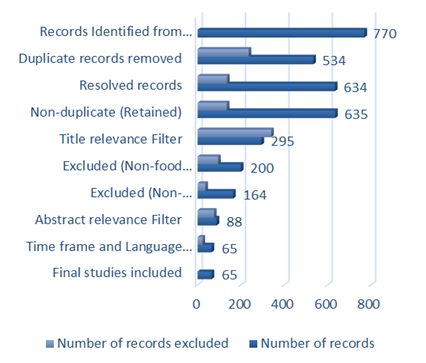
Figure 1: Summary chart of the screening process
L.M. Syikilili 1,2, M.L. Singgih 1**
1. Department of Industrial and Systems Engineering, Institut Teknologi Sepuluh Nopember, Surabaya, Indonesia
2. Department of Food Science and Agro-Processing Engineering, Sokoine University of Agriculture, Morogoro, Tanzania
3. Department of Industrial Engineering, Universitas Tridinanti, Palembang, Indonesia
-
- LSS–HACCP integration improved food safety compliance and operational efficiency in food SMEs.
- Lean tools (e.g., 5S, VSM, TPM, and visual management) reduced waste and improved process standardisation and documentation.
- Six Sigma tools (e.g., DMAIC and FMEA) strengthened data-driven control and risk prioritisation in quality-critical processes.
- Structured integration frameworks remained limited, particularly for SMEs.
| Article type Review article |
ABSTRACT Background: This study analysed the integration of Lean Six Sigma (LSS) and Hazard Analysis and Critical Control Points (HACCP) in food manufacturing, with particular attention to Small and Medium-Sized Enterprises (SMEs). Methods: A systematic literature review was conducted following Preferred Reporting Items for Systematic reviews and Meta-Analysis (PRISMA 2020) guidelines and the Population, Intervention, Comparison, Outcome, Study Design (PICOS) framework. Articles were retrieved exclusively from the Scopus database. The search was conducted in July 2025 and covered publications from 2015 to 2025. A total of 770 records were identified, and after duplicate removal and eligibility screening, 65 peer-reviewed studies were included for qualitative synthesis. Screening and data extraction were performed manually using Excel. Results: The review showed that most of the analysed studies reported positive impacts of LSS–HACCP implementation across sectors such as packaging, dairy, meat, seafood, and confectionery. Lean tools, including visual management, Value Stream Mapping (VSM), Total Productive Maintenance (TPM), and 5S, were frequently applied to improve process standardisation, reduce waste, and strengthen documentation practices in SMEs. Six Sigma tools, particularly Define, Measure, Analyze, Improve, Control (DMAIC) and Failure Mode and Effects Analysis (FMEA), were reported to enhance defect control and support structured risk prioritisation in quality-critical processes. Conclusions: Despite the documented benefits of integration, several obstacles persist, including limited access to structured guidance, inconsistent documentation practices, and a lack of technical expertise. This analysis highlights the necessity for flexible, hybrid models that integrate HACCP and LSS to support manufacturing excellence and maintainable food safety procedures. Validating such models in SME contexts should therefore be a priority for future research. © 2026, Shahid Sadoughi University of Medical Sciences. This is an open access article under the Creative Commons Attribution 4.0 International License. |
|
| Keywords Food Food Safety HACCP Lean Six Sigma |
||
| Article history Received: 17 Aug 2025 Revised: 17 Feb 2026 Accepted: 22 Feb 2026 |
||
| Abbreviations BRCGS=British Retail Consortium Global Standards DMAIC=Define, Measure, Analyze, Improve, Control FMEA=Failure Mode and Effect Analysis HACCP=Hazard Analysis Critical Control Points LM=Lean Manufacturing PICOS=Population, Intervention, Comparison, Outcome, Study Design PRISMA=Preferred Reporting Items for Systematic reviews and Meta-Analysis |
To cite: Syikilili, L.M., Singgih, M.L. and Maryadi1, D. (2026) 'A Systematic Review of Lean Six Sigma and HACCP integration in the food industry: Toward manufacturing excellence and compliance', Journal of Food Quality and Hazards Control, 13(1), pp. 50-58.
Introduction
The food industry is a crucial sector that must meet stringent safety standards, ensure operational efficiency, and deliver high-quality products. The global food industry operates in a dynamic and complex environment. It faces increasing demands for cost-effectiveness, operational efficiency, product quality, and strict compliance with food safety regulations (Budianto et al., 2023; López-Santiago et al., 2024). Adopting robust management systems and procedures is crucial in this complex environment to ensure consistent performance and maintain customer trust. Lean Manufacturing (LM), Six Sigma (SS), and Hazard Analysis Critical Control Points (HACCP) have been instrumental in enhancing various aspects of industrial operations. (Alarcón et al., 2023; Arifin, Mustaniroh and Sucipto, 2021; Kristiningrum et al., 2023).
LM has its roots in the Toyota Production System, whereas HACCP is a globally recognized system for controlling hazards (Szczyrba and Ingaldi, 2024). Lean Six Sigma (LSS) combines Six Sigma data-driven methodology with Lean principles to reduce variability and defects (, and optimize process flow and eliminate waste (Hia, Singgih and Gurning, 2025; Kusumawardani, Ana and Singgih, 2025; Maryadi and Ichtiarto, 2021; Maryadi, Singgih and Dewi, 2025). To ensure food safety, HACCP provides a systematic preventive framework for identifying, evaluating, and controlling food safety hazards throughout the food chain, as demonstrated by (Kristiningrum et al., 2023 ; Vanany et al., 2021; Duan et al., 2023).
Lean, Six Sigma, and HACCP are widely used to improve operational performance and food safety. However, researchers and practitioners are still exploring how to integrate these approaches effectively within a single framework. As Azalanzazllay et al. (2022) and Azucena Domínguez et al. (2021) State, these approaches can synergistically combine the advantages of effectiveness, quality, and safety. This integration allows them to be combined into a single, coherent framework. Azucena Domínguez et al. (2021) demonstrated this by integrating Lean 6S with HACCP, using “Safety” as the sixth S to benchmark hygiene and reduce contamination. This type of strategy encourages compliance, reduces defects, and supports stable performance and continual development, potentially driving broader changes across the food manufacturing value chain.
This study investigates the integration of LSS and HACCP within food manufacturing, particularly in Small and Medium-sized Enterprises (SMEs). It addresses the fragmented implementation of food safety and operational excellence systems, highlighting the challenges of maintaining compliance and efficiency in a complex global food supply chain (Azalanzazllay et al., 2022; Dora and Gellynck, 2015a; Dora, Kumar and Gellynck, 2016).
LSS process improvement tools, combined with HACCP’s preventive safety structure, aim to encourage methods that are durable, scalable, and consistent with regulations in settings with limited resources, as demonstrated by the integration of Lean tools with the British Retail Consortium Global Standards (BRCGS) by (Bravo-Paliz and Avilés-Sacoto, 2022). Likewise, Hia and Singgih and Gurning (2022) explained that integrating lean tools and Define, Measure, Analyze, Improve, Control (DMAIC) can create a clear and compelling approach to enhance efficiency, reduce waste, and improve overall process performance.
To assess the application, integration, advantages, and challenges of LSS and HACCP in the food industry, with an emphasis on SMEs, this systematic literature review summarized findings from 65 academic publications, primarily accessed via the Digital Object Identifiers (DOIs) of Scopus papers. The study discusses the main goals, approaches, resources, sector-specific uses, results, obstacles, and research gaps, particularly regarding integrated LSS-HACCP frameworks for SMEs (Dora and Gellynck, 2015a; Dora, Kumar and Gellynck, 2016). The goal of this systematic literature review is to compile research findings from recent scholarly works on the use, effects, and possible integration of Six Sigma, HACCP, and LM in the food sector. Since SMEs comprise a sizable share of the global food production landscape, special attention is paid to identifying the distinctive challenges and critical preparedness criteria that apply to them (Azalanzazllay et al., 2022; Dora and Gellynck, 2015a; Dora, Kumar and Gellynck, 2016) . To support the development of more integrated, affordable, and accessible solutions for these critical enterprises, this analysis also aims to identify existing research gaps and suggest future research areas.
LM has its roots in the Toyota Production System, whereas HACCP is a globally recognized system for controlling hazards (Szczyrba and Ingaldi, 2024). Lean Six Sigma (LSS) combines Six Sigma data-driven methodology with Lean principles to reduce variability and defects (, and optimize process flow and eliminate waste (Hia, Singgih and Gurning, 2025; Kusumawardani, Ana and Singgih, 2025; Maryadi and Ichtiarto, 2021; Maryadi, Singgih and Dewi, 2025). To ensure food safety, HACCP provides a systematic preventive framework for identifying, evaluating, and controlling food safety hazards throughout the food chain, as demonstrated by (Kristiningrum et al., 2023 ; Vanany et al., 2021; Duan et al., 2023).
Lean, Six Sigma, and HACCP are widely used to improve operational performance and food safety. However, researchers and practitioners are still exploring how to integrate these approaches effectively within a single framework. As Azalanzazllay et al. (2022) and Azucena Domínguez et al. (2021) State, these approaches can synergistically combine the advantages of effectiveness, quality, and safety. This integration allows them to be combined into a single, coherent framework. Azucena Domínguez et al. (2021) demonstrated this by integrating Lean 6S with HACCP, using “Safety” as the sixth S to benchmark hygiene and reduce contamination. This type of strategy encourages compliance, reduces defects, and supports stable performance and continual development, potentially driving broader changes across the food manufacturing value chain.
This study investigates the integration of LSS and HACCP within food manufacturing, particularly in Small and Medium-sized Enterprises (SMEs). It addresses the fragmented implementation of food safety and operational excellence systems, highlighting the challenges of maintaining compliance and efficiency in a complex global food supply chain (Azalanzazllay et al., 2022; Dora and Gellynck, 2015a; Dora, Kumar and Gellynck, 2016).
LSS process improvement tools, combined with HACCP’s preventive safety structure, aim to encourage methods that are durable, scalable, and consistent with regulations in settings with limited resources, as demonstrated by the integration of Lean tools with the British Retail Consortium Global Standards (BRCGS) by (Bravo-Paliz and Avilés-Sacoto, 2022). Likewise, Hia and Singgih and Gurning (2022) explained that integrating lean tools and Define, Measure, Analyze, Improve, Control (DMAIC) can create a clear and compelling approach to enhance efficiency, reduce waste, and improve overall process performance.
To assess the application, integration, advantages, and challenges of LSS and HACCP in the food industry, with an emphasis on SMEs, this systematic literature review summarized findings from 65 academic publications, primarily accessed via the Digital Object Identifiers (DOIs) of Scopus papers. The study discusses the main goals, approaches, resources, sector-specific uses, results, obstacles, and research gaps, particularly regarding integrated LSS-HACCP frameworks for SMEs (Dora and Gellynck, 2015a; Dora, Kumar and Gellynck, 2016). The goal of this systematic literature review is to compile research findings from recent scholarly works on the use, effects, and possible integration of Six Sigma, HACCP, and LM in the food sector. Since SMEs comprise a sizable share of the global food production landscape, special attention is paid to identifying the distinctive challenges and critical preparedness criteria that apply to them (Azalanzazllay et al., 2022; Dora and Gellynck, 2015a; Dora, Kumar and Gellynck, 2016) . To support the development of more integrated, affordable, and accessible solutions for these critical enterprises, this analysis also aims to identify existing research gaps and suggest future research areas.
Research Methodology
Search strategy
This Systematic Literature Review (SLR) was conducted using a systematic process that incorporates the Population, Intervention, Comparison, Outcome, Study Design (PICOS) framework and the Preferred Reporting Items for Systematic reviews and Meta-Analyses (PRISMA 2020) protocol to ensure rigor, reproducibility, and relevance.
The PICOS framework was selected to structure the research question systematically. It helps to align key elements relevant to industrial engineering, food safety, and quality management research. This structure is beneficial for analyzing applied research across multiple disciplines, such as industrial engineering, food safety, and quality management, where interventions (e.g., LSS and HACCP integration) affect specific populations (e.g., SMEs in the food manufacturing industry). The inclusion criteria are clarified by the PICOS framework, ensuring that the chosen studies are relevant to the study goal.
The PICOS framework was used to inform the study topic and to refine the search strategy’s accuracy. This method aids in a more accurate synthesis of the documents (Cusiatado, Farfán and Rada, 2024). Table 1 provides specifics on the elements and associated leading questions.
This Systematic Literature Review (SLR) was conducted using a systematic process that incorporates the Population, Intervention, Comparison, Outcome, Study Design (PICOS) framework and the Preferred Reporting Items for Systematic reviews and Meta-Analyses (PRISMA 2020) protocol to ensure rigor, reproducibility, and relevance.
The PICOS framework was selected to structure the research question systematically. It helps to align key elements relevant to industrial engineering, food safety, and quality management research. This structure is beneficial for analyzing applied research across multiple disciplines, such as industrial engineering, food safety, and quality management, where interventions (e.g., LSS and HACCP integration) affect specific populations (e.g., SMEs in the food manufacturing industry). The inclusion criteria are clarified by the PICOS framework, ensuring that the chosen studies are relevant to the study goal.
The PICOS framework was used to inform the study topic and to refine the search strategy’s accuracy. This method aids in a more accurate synthesis of the documents (Cusiatado, Farfán and Rada, 2024). Table 1 provides specifics on the elements and associated leading questions.
Table 1: Population, Intervention, Comparison, Outcome, Study Design (PICOS) framework for the systematic review
| Component | Definition | Review Context |
| P – Population/Problem | Target group or setting | Food manufacturing organisations, Small and Medium-Sized Enterprises (SMEs) |
| I – Intervention | Intervention under investigation | Integration of Lean Six Sigma (LSS) and Hazard Analysis and Critical Control Point (HACCP) systems |
| C – Comparison | Benchmark or standard method | Non-integrated application of either Lean Six Sigma (LSS) or Hazard Analysis and Critical Control Point (HACCP) alone; conventional quality and safety systems |
| O – Outcomes | Expected effects or benefits | Enhanced food safety compliance, product quality, process efficiency, and operational excellence |
| S – Study Design | Types of studies included | Peer-reviewed empirical studies, case studies, frameworks, models, and systematic literature reviews |
The PRISMA 2020 protocol was also utilized to organize the evaluation process transparently and methodically. PRISMA is well known for its comprehensive documentation and ability to lessen bias in literature reviews. PRISMA guides researchers through defined stages, including inclusion, eligibility, screening, and identification. This assessment was particularly relevant because it involved multiple screening stages, requiring thorough tracking of sources from the initial search through their ultimate selection. Both PRISMA and PICOS provide methodological transparency. They also guarantee scientific rigour and reproducibility (Cusiatado, Farfán and Rada, 2024).
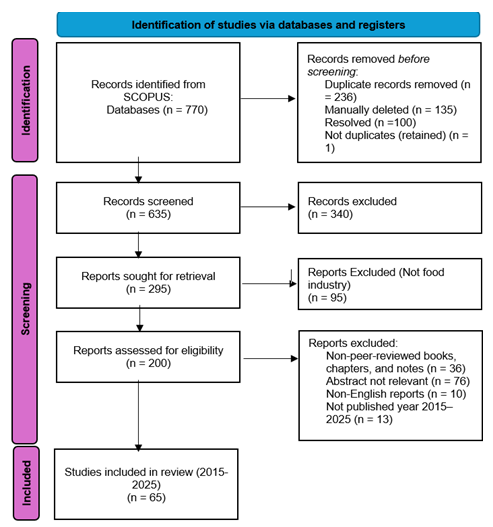
The literature search was performed solely in the Scopus database (Elsevier B.V., Amsterdam, The Netherlands), which offers extensive coverage of peer-reviewed publications in engineering, food science, and industrial management. Boolean operators were used in the article title, abstract, and keyword fields to conduct searches. The search was conducted on July 14, 2025. A total of 770 initial records were identified after applying several filters, as shown in Figure 2.
Inclusion and exclusion criteria
Articles were included if (1) they were published between 2015 and 2025 to guarantee relevance to contemporary industry practices and developing food safety standards. This timeline documents current developments in integrating LSS and HACCP, specifically in response to post-pandemic manufacturing challenges, digital transformation, and sustainability goals; (2) they were provided as case studies, literature reviews, or experimental frameworks after undergoing review; Including conference proceedings containing experimental frameworks or empirical case studies relevant to LSS applications and food safety; (3) they concentrated on food processing and safety production; (4) they were written in English; (5) they addressed LSS, HACCP, or their integration. Conversely, articles were excluded if (1) they were book chapters, editorials, or unpublished manuscripts; (2) they were not directly related to food industry applications; (3) they lacked complete metadata or had inaccessible full texts; or (4) they appeared as duplicates in search results.
Search terms and parameters
The search strategy included combinations of terms such as “Lean Six Sigma,” “HACCP,” “food industry,” “food safety,” “framework,” “integration,” and “hybrid.” The full search equations and parameters are summarized in Table 2. The literature search was conducted exclusively in the Scopus database due to its extensive multidisciplinary coverage, strong indexing standards, and broad representation of engineering, food science, and quality management research. Scopus was selected because it provides comprehensive citation tracking and consistent metadata, which enhances reproducibility and methodological transparency in systematic reviews. Although multiple databases can enrich coverage, prior systematic reviews in manufacturing and food systems research have demonstrated that Scopus provides sufficient breadth for capturing peer-reviewed empirical studies in these domains. However, using a single database may limit the inclusion of studies indexed exclusively in other repositories, which is acknowledged as a methodological limitation.
The search keywords were systematically derived using the PICOS framework to ensure conceptual alignment with the research question. Each PICOS component (Population, Intervention, Comparison, Outcome, Study Design) was translated into primary search constructs. Initial seed terms such as “Lean Six Sigma”, “HACCP”, and “food industry” were identified based on theoretical constructs. These were expanded using:
The literature search was performed solely in the Scopus database (Elsevier B.V., Amsterdam, The Netherlands), which offers extensive coverage of peer-reviewed publications in engineering, food science, and industrial management. Boolean operators were used in the article title, abstract, and keyword fields to conduct searches. The search was conducted on July 14, 2025. A total of 770 initial records were identified after applying several filters, as shown in Figure 2.
Inclusion and exclusion criteria
Articles were included if (1) they were published between 2015 and 2025 to guarantee relevance to contemporary industry practices and developing food safety standards. This timeline documents current developments in integrating LSS and HACCP, specifically in response to post-pandemic manufacturing challenges, digital transformation, and sustainability goals; (2) they were provided as case studies, literature reviews, or experimental frameworks after undergoing review; Including conference proceedings containing experimental frameworks or empirical case studies relevant to LSS applications and food safety; (3) they concentrated on food processing and safety production; (4) they were written in English; (5) they addressed LSS, HACCP, or their integration. Conversely, articles were excluded if (1) they were book chapters, editorials, or unpublished manuscripts; (2) they were not directly related to food industry applications; (3) they lacked complete metadata or had inaccessible full texts; or (4) they appeared as duplicates in search results.
Search terms and parameters
The search strategy included combinations of terms such as “Lean Six Sigma,” “HACCP,” “food industry,” “food safety,” “framework,” “integration,” and “hybrid.” The full search equations and parameters are summarized in Table 2. The literature search was conducted exclusively in the Scopus database due to its extensive multidisciplinary coverage, strong indexing standards, and broad representation of engineering, food science, and quality management research. Scopus was selected because it provides comprehensive citation tracking and consistent metadata, which enhances reproducibility and methodological transparency in systematic reviews. Although multiple databases can enrich coverage, prior systematic reviews in manufacturing and food systems research have demonstrated that Scopus provides sufficient breadth for capturing peer-reviewed empirical studies in these domains. However, using a single database may limit the inclusion of studies indexed exclusively in other repositories, which is acknowledged as a methodological limitation.
The search keywords were systematically derived using the PICOS framework to ensure conceptual alignment with the research question. Each PICOS component (Population, Intervention, Comparison, Outcome, Study Design) was translated into primary search constructs. Initial seed terms such as “Lean Six Sigma”, “HACCP”, and “food industry” were identified based on theoretical constructs. These were expanded using:
- Synonym identification
- Controlled vocabulary alignment within the Scopus indexing system
- Boolean operator testing (AND/OR combinations)
- Iterative pilot searches to evaluate result sensitivity and specificity.
The refinement process ensured that the final search string captured both integration-focused studies and stand-alone applications relevant to SMEs and food safety compliance.
Table 2: Summary of the methodology used for the search
| Search parameters | Parameters for searching for information. | ||
| Research question | How is the integration of Lean Six Sigma (LSS) and Hazard Analysis Critical Control Points (HACCP) applied in the food industry, and what frameworks support food safety and operational excellence? | ||
| Keywords used in the search | Lean Six Sigma (LSS). Hazard Analysis and Critical Control Point (HACCP). Food Safety. Food Industry. Food SMEs. Compliance. Operational Excellence. Process Improvement. Quality Management. | ||
| Data repository | Scopus | ||
| Selection interval | 2015-2025 | ||
| Language | English | ||
| Document type | Peer-reviewed articles | Case studies | Conference Paper |
| Accessibility | Open and Close access | ||
| Criterion of selection | Peer-reviewed (2015–2025), English, LSS/HACCP in the food industry, with empirical data; excludes duplicates, unrelated, and non-scholarly sources. | ||
| General Equation | (1) (“Lean Six Sigma” OR “Lean‑6S”) AND HACCP AND (“food industry” OR “food safety”) AND (framework OR integration OR hybrid) → 81 results | ||
| (2) (“HACCP” OR “FOOD SAFETY” OR “QUALITY MANAGEMENT” OR “CCP” OR “SOP” OR “CRITICAL CONTROL POINTS”) AND (“food industry” OR “food processing” OR “food manufacturing”) → 80,972 documents | |||
| (3) (“HACCP” OR “LSS”) AND (“food industry” OR “food processing” OR “food SMEs” OR “food manufacturing”) → 7,371 documents |
Screening process
The selection of keywords began with broad terms related to LSS, HACCP, and food industry practices. These were narrowed down to phrases such as “Lean Six Sigma and HACCP integration," “food safety compliance," “food SMEs,” and “operational efficiency,” which particularly address integration, compliance, and manufacturing excellence. Due to its academic rigor, reliable indexing, and extensive coverage of peer-reviewed articles relevant to industrial engineering and food technology, the Scopus database was used exclusively for the search. Combinations of these terms in the article title, abstract, and keywords fields were used to identify 770 articles via Boolean searches, with results acquired on July 14, 2025.
The screening process followed PRISMA 2020 guidelines. Initially, 770 records were identified. After removing 236 duplicates, 534 records remained for further assessment. Title screening excluded 340 records, leaving 194 records. Subsequently, 95 non-food-related studies and 36 non-peer-reviewed sources (e.g., books, notes, and non-article formats) were removed, resulting in 63 records. After abstract screening and eligibility assessment, 76 records were excluded for relevance, and a further 23 were removed for language (English only) and publication year (2015–2025). Finally, 65 peer-reviewed studies were included for qualitative synthesis.
Data screening, organisation, and qualitative extraction were conducted manually using Microsoft Excel 2019 (Microsoft Corporation, Redmond, WA, USA). The software was used to manage retrieved records, remove duplicates, categorise eligible studies, and facilitate structured qualitative synthesis. The design, implementation, difficulties, and prospects of combining LSS and HACCP in the food manufacturing industry, especially in SMEs, are examined on the basis of these publications. The literature selection process is summarized in the PRISMA 2020 flow diagram (Figures 1 and 2).
The selection of keywords began with broad terms related to LSS, HACCP, and food industry practices. These were narrowed down to phrases such as “Lean Six Sigma and HACCP integration," “food safety compliance," “food SMEs,” and “operational efficiency,” which particularly address integration, compliance, and manufacturing excellence. Due to its academic rigor, reliable indexing, and extensive coverage of peer-reviewed articles relevant to industrial engineering and food technology, the Scopus database was used exclusively for the search. Combinations of these terms in the article title, abstract, and keywords fields were used to identify 770 articles via Boolean searches, with results acquired on July 14, 2025.
The screening process followed PRISMA 2020 guidelines. Initially, 770 records were identified. After removing 236 duplicates, 534 records remained for further assessment. Title screening excluded 340 records, leaving 194 records. Subsequently, 95 non-food-related studies and 36 non-peer-reviewed sources (e.g., books, notes, and non-article formats) were removed, resulting in 63 records. After abstract screening and eligibility assessment, 76 records were excluded for relevance, and a further 23 were removed for language (English only) and publication year (2015–2025). Finally, 65 peer-reviewed studies were included for qualitative synthesis.
Data screening, organisation, and qualitative extraction were conducted manually using Microsoft Excel 2019 (Microsoft Corporation, Redmond, WA, USA). The software was used to manage retrieved records, remove duplicates, categorise eligible studies, and facilitate structured qualitative synthesis. The design, implementation, difficulties, and prospects of combining LSS and HACCP in the food manufacturing industry, especially in SMEs, are examined on the basis of these publications. The literature selection process is summarized in the PRISMA 2020 flow diagram (Figures 1 and 2).
Figure 1: Summary chart of the screening process
Figure 2: Preferred Reporting Items for Systematic Reviews and Meta-Analyses (PRISMA) flow diagram
Results and discussion
Methodological diversity and industry specificity
The literature indicates that Lean, Six Sigma, and HACCP are applied in the food sector using a wide range of approaches. Researchers often employ qualitative methods, such as case studies (e.g Erquínigo et al., 2023), direct observations (e.g Dima, Radu and Dobrin, 2024), document analysis (e.g Kristiningrum et al., 2023), and semi-structured interviews, as seen in Bravo-Paliz and Avilés-Sacoto (2022), Dora, Kumar and Gellynck (2016); Guerrero-Castiblanco, Maldonado-Simán and Martínez-Hernández (2024). Only questionnaire surveys (e.g., Azalanzazllay et al., 2022), descriptive statistics (e.g., defect rate estimations in Six Sigma publications), and process capacity indicators (Desai et al., 2015) were used as quantitative approaches in the examined research. Advanced techniques such as Structural Equation Modeling (SEM), Decision-Making Trial and Evaluation Laboratory (DEMATEL), or correlation analysis were not employed. Out of the 65 reviewed studies, eight primarily applied Six Sigma (DMAIC) methodologies, e.g., (Arifin, Mustaniroh and Suciptoe, 2021; Hidayat, Tsana and Maflahah, 2022), while five combined LSS, e.g., (Kharub et al., 2022; Vanany et al., 2021). Twelve studies utilized LM tools (e.g, Value Stream Mapping [VSM], 5S, Single-Minute Exchange of Die [SMED) (Gładysz, uczacki and Haskins, 2020; Hariyani et al., 2023), and 28 implemented HACCP frameworks, including integrations with Failure Mode and Effect Analysis ([FMEA]; Szczyrba and Ingaldi, 2024) or AI (Dragone et al., 2024). Additionally, four studies focused on FMEA for stand-alone risk analysis (e.g., Wang, 2024), 5 adopted qualitative/case study designs (e.g., Dora, Kumar and Gellynck, 2016; Farissi, Oumami and Beidouri, 2021), and three employed mixed-method approaches (e.g., Azucena Domínguez et al., 2021) Lean 6S + HACCP.
This methodological diversity underscores the complex nature of operational and safety challenges in the food sector, underscoring the need to tailor research approaches to address them effectively. Implementation with research methods is highly contextualized, whereas the core principles of Lean, Six Sigma, and HACCP have meaningful universal applicability. Studies address various food industry sub-sectors, including confectionery, meat processing, dairy, tea, seafood, packaging, apple juice concentrate, coffee milk beverages, and complementary foods. Requirements regarding perishability-specific processing, along with regulatory subtleties, reflect this granular focus as unique characteristics and challenges intrinsic to different food product categories and their production environments.
This specificity in application and research suggests that any proposed integrated framework or solution for the food industry, particularly for SMEs, must be flexible and adaptable. A “one-size-fits-all” approach is unlikely to be effective, given the inherent variability in food processing, which requires solutions tailored to the distinct operational realities of different food businesses.
The universal challenge of inaccessibility in food industry research
A notable issue encountered during this review was the widespread inaccessibility of a significant number of provided web sources, even those with Digital Object Identifiers (DOIs). This includes numerous papers across the categories of Lean, Six Sigma, and HACCP. The limited accessibility of several indexed publications created practical challenges during the review process. Restricted access may hinder comprehensive synthesis and limit knowledge dissemination, particularly for SMEs. A substantial body of academic work may exist. Yet, it remains difficult to access and synthesize, potentially leading to a fragmented understanding within the research community and to duplicated efforts in both academic and industrial contexts. For instance, SMEs, which often lack access to expensive journal subscriptions, are particularly disadvantaged by such barriers, hindering their ability to leverage cutting-edge research for operational improvements. This situation highlights a critical need for academic publishers and research institutions to intensify their efforts towards open access, ensure the robustness of persistent identifiers, and prioritise long-term digital preservation. Such measures are essential to ensure that scientific knowledge is readily available for both academic advancement and practical application, especially for those entities that stand to benefit most from its insights.
LM in the food industry: enhancing productivity, quality, and strategic capability in SMEs
LM is widely employed in the food industry to identify and eliminate waste (Muda), optimize process flow, and enhance overall productivity. Waste, Defects, Overproduction, Waiting, Unused Skills, Transportation, Inventory, Motion, and Excess Processing are well-known categories of downtime that are frequently targeted by Lean intervention (Maryadi et al., 2024). VSM, Just-In-Time (JIT), 5S, and Total Productive Maintenance (TPM) are among the tools frequently used to visualize material and information flows, eliminate wasteful processes, and enhance resource utilization. To identify inefficiencies and promote changes, VSM is essential. A case study of a fish processing company that produces herring salad, employed VSM to identify bottlenecks, including lengthy equipment setup times and idle periods. Using Lean techniques, particularly Single-Minute Exchange of Dies (SMED), the company increased packing line capacity by 11% and reduced average changeover time by 34%, from 17.5 to 11.5 min (Maalouf and Zaduminska, 2019).
Beyond individual tools, Lean has shown clear and measurable improvements in operational performance. For instance, a packaging SME in Ecuador increased Overall Equipment Effectiveness (OEE) by applying VSM, operator balance charts, and Kaizen, and engaging production and maintenance teams to cut losses and setup time on bag-cutting/sealing machines, which raised OEE on machines 1 and 2, resulting in higher efficiency and lower costs (Bravo-Paliz and Avilés-Sacoto, 2022). SMEs in Kosovo and North Macedonia have strengthened process efficiency and resource utilization by adopting Lean practices such as Just-In-Time (JIT), Total Productive Maintenance (TPM), Statistical Process Control (SPC), Kaizen, and workforce involvement. These initiatives streamlined the production flow, enhanced responsiveness, and reduced waste, contributing to shorter lead times and a better use of resources (Veseli, Bajraktari and Trajkovska Petkoska, 2024). Likewise, by reducing product overfill during gingerbread manufacturing, the application of LSS in a confectionery SME resulted in significant cost savings, illustrating the operational and financial advantages of process optimization in small food businesses (Maryadi, Azairin and Suhendra, 2023; Dora and Gellynck, 2015b).
By emphasizing process variation and defect reduction through data-driven approaches, Six Sigma enhances Lean waste-reduction objectives. The DMAIC cycle, which combines Lean and Six Sigma principles, has enhanced food SMEs problem-solving capabilities. For example, Dora and Gellynck (2015b) demonstrated that a confectionery company’s adoption of LSS led to notable process stabilization and quantifiable cost savings. Similarly, Costa et al. (2018) highlighted how Six Sigma ensures constant output and ongoing process control by adding analytical rigour to Lean initiatives, particularly in quality-critical areas such as food production.
One common benefit of Lean methods is cost reduction. Companies in North Macedonia and Kosovo have reduced waste and improved operational efficiency through Lean practices, while a packaging SME in Ecuador cut setup and downtime on bag-cutting/sealing machines, and a confectionery SME achieved measurable cost savings by reducing product overfill (Bravo-Paliz and Avilés-Sacoto, 2022; Dora and Gellynck, 2015b). Although the core aim of Lean is efficiency, by reducing variability and stabilizing processes, it also significantly enhances quality. Lean tools were utilized to address mechanical issues in flexible packaging that impacted dimensional accuracy and seal integrity (Bravo-Paliz and Avilés-Sacoto, 2022). Statistical Process Control (SPC) helped ensure defect-free operations by monitoring critical process parameters and supporting real-time corrections. Furthermore, Lean’s focus on empowerment, training, and employee involvement was crucial to sustaining constant quality ( Dora, Kumar and Gellynck, 2016).
Lean strategic value also comes from its ability to support broader business goals. Several studies demonstrate how Lean contributes to sustainability, food safety, and compliance with regulatory requirements. Ferreira et al. )2017) demonstrated how Lean aligned with zero-waste objectives in a bakery SME, while Bravo-Paliz and Avilés-Sacoto )2022) showed that Lean improved documentation, traceability, and hygiene, enabling BRCGS certification. Furthermore, they highlighted how Lean techniques enabled an Ecuadorian food packaging company to comply with BRCGS food safety certification by promoting improved organization, hygienic control, and methodical documentation practices. These improvements strengthened the basis for proactive assurance of food safety and regulatory harmonisation.
However, due to the perishability of products and the unpredictability of raw materials, implementing Lean in the food industry presents challenges. Food products have shorter shelf lives and seasonal quality fluctuations, in contrast to durable commodities. Research highlights the necessity of flexible takt times, buffer inventories, and hybrid production models to implement adaptive Lean tactics. These modifications ensure that Lean remains effective without compromising the freshness or safety of the product, while also increasing productivity—, as evidenced by research showing improved financial performance and higher production rates.
The role of HACCP in food Safety and regulatory compliance for SMEs: foundations, limitations, and the need for LSS integration
In the food sector, HACCP is crucial for ensuring food safety and facilitating regulatory compliance, particularly for SMEs. Recognized for adhering to global food safety regulations, such as ISO 22000 and Codex Alimentarius, HACCP provides SMEs with a systematic framework to proactively identify, track, and manage potential risks in the manufacturing process (Cabrera et al., 2020; Farissi, Oumami and Beidouri, 2021; Guerrero-Castiblanco, Maldonado-Simán and Martínez-Hernández, 2024). According to case studies in SMEs that process meat in Latin America, the adoption of HACCP has resulted in improved process controls, enhanced sanitation, and effective compliance with national regulatory audits, all of which are essential for maintaining access to export markets Guerrero-Castiblanco, Maldonado-Simán and Martínez-Hernández, 2024). Furthermore, bibliometric analyses indicate that HACCP remains one of the most effective methods for enabling SMEs to comply with evolving food safety regulations, reducing the likelihood of recalls, and ensuring traceability (Radu et al., 2023). However, several studies also highlight persistent barriers to HACCP's effectiveness among SMEs. These include a lack of technological expertise, inadequate documentation practices, insufficient staff training, and a shortage of resources to support system maintenance and verification (Alcaraz, Robles and Vargas, 2025; Guerrero-Castiblanco, Maldonado-Simán and Martínez-Hernández, 2024). Furthermore, because SMEs typically view HACCP as a compliance checklist rather than a tool for performance improvement, it is frequently applied reactively with little emphasis on continuous improvement or data-driven decision-making (Dima, Radu and Dobrin., 2024). Due to this operational constraint, academics have argued that, to realize the promise of LSS approaches fully, HACCP should be integrated with them. Food SMEs can increase process efficiency, improve audit preparedness, and instil a continuous improvement culture by combining the preventive controls of HACCP with the waste reduction methods of Lean (e.g., 5S and VSM) and Six Sigma (e.g., DMAIC) (Erquínigo et al., 2023; Dima, Radu and Dobrin, 2024). This integrated strategy is particularly relevant for SMEs facing increasing regulatory complexity, consumer expectations for safer food, and internal resource limitations.
Emerging gap: fragmented and underexplored integration of Lean tools with food safety management systems
Despite increased interest in integrating operational excellence with food safety, a substantial research and practice gap exists in fully integrated frameworks that combine Lean technologies with Formal Food Safety Management Systems (FSMS) such as BRCGS, HACCP, or ISO 22000. The use of Lean techniques in a BRCGS-certified Ecuadorian packaging SME, for example, was described by Bravo-Paliz and Avilés-Sacoto (2022). However, they discovered that the integration was informal and unstructured, with no clear plan for coordinating Lean goals with BRCGS preventive risk controls. In a similar vein, Szczyrba and Ingaldi (2024), investigated how FMEA could help HACCP by giving crucial control points priority; however, the study treated FMEA as an independent addition rather than a component of a more comprehensive integrated Lean-HACCP approach.
This fragmented approach contrasts with the potential synergies demonstrated in other studies. In a dairy setting, Ismael (2012) demonstrated that integrating Six Sigma and HACCP techniques decreased non-conformance incidents and microbiological contamination. According to studies, food SMEs can greatly improve risk prioritisation and remedial decision-making by integrating structured Lean and Six Sigma technologies, such as FMEA, into HACCP systems. Even though these technologies are frequently used as stand-alone enhancements, they provide important support in improving operational consistency and control accuracy within HACCP frameworks, especially in settings with limited resources, such as small and medium-sized food businesses. According to Balon and Dziadkowiec (2024), integrating Lean methods, especially the 5S stages such as visual organization and standardization, can significantly improve workplace order, increase monitoring visibility, and ensure uniform documentation, all of which can facilitate better HACCP implementation. Small food enterprises benefit most from this synergy, as their limited resources often result in gaps in record-keeping and food safety controls. Additionally, Azucena Domínguez et al. (2021) provided a conceptual framework connecting the 6S (Lean + Safety) approach to HACCP. This framework demonstrates how workplace organization, cleanliness, and safety regulations can be harmonised for better traceability, hygiene, and process control.
Collectively, these studies show that although there are complementary advantages, there are currently no standardized models or frameworks in the field that direct full-scale integration. The development of hybrid, context-adaptable systems remains an understudied yet critically needed field of research and practice, especially in certified environments and SMEs.
Conclusion
This paper emphasizes the promise of integrating LSS and HACCP to improve food safety and operational effectiveness, particularly in SMEs. Six Sigma fortifies data-driven decision-making and risk prioritisation, while Lean tools enhance process control and documentation. Fully integrated frameworks remain underexplored, despite individual applications being well-documented. To create scalable, hybrid models that promote efficiency, compliance, and ongoing development throughout the food business, more research is required.
Future research should prioritise the development of structured reference architectures that explicitly map LSS tools to HACCP principles and broader Food Safety Management Systems (FSMS). Clear methodological linkages are necessary to move beyond fragmented applications toward fully integrated frameworks. Empirical validation through multi-site studies in SMEs is also required to assess scalability, contextual adaptability, and long-term sustainability. Such studies should harmonise operational performance indicators with food safety metrics and human factor considerations. Further investigation should explore the integration of digital technologies and AI-enabled monitoring systems to support real-time Critical Control Point (CCP) management and dynamic risk prioritisation.
Additionally, future research should quantify economic, compliance, and sustainability impacts to strengthen the business case for integration. The development of models for assessing SME readiness and maturity would further support structured implementation. Finally, open-access implementation toolkits and practical guidance frameworks are recommended to facilitate adoption in resource-constrained food enterprises.
Author contributions
L.M.S. conceptualized the study, conducted the systematic review, performed data screening and qualitative synthesis, and prepared the original draft manuscript; M.L.S supervised the research process, contributed to methodology refinement, and critically reviewed and edited the manuscript; D.M. contributed to conceptual development, validation of findings, and manuscript revision. All authors read and approved the final version of the manuscript.
Acknowledgements
The authors would like to express their gratitude to Institut Teknologi Sepuluh Nopember (ITS), Indonesia, for academic support and research facilitation. Appreciation is also extended to the Government of the United Republic of Tanzania and the Government of Indonesia for supporting international academic collaboration.
Conflicts of interest
The authors declare that there is no conflict of interest.
Funding
This study has been funded by the Indonesian AID on behalf of the government of the Republic of Indonesia. This publication/communication reflects the view only of the author, and the Indonesian AID cannot be held responsible for any use which may be made of the information contained therein.
Ethical consideration
Not applicable.
Results and discussion
Methodological diversity and industry specificity
The literature indicates that Lean, Six Sigma, and HACCP are applied in the food sector using a wide range of approaches. Researchers often employ qualitative methods, such as case studies (e.g Erquínigo et al., 2023), direct observations (e.g Dima, Radu and Dobrin, 2024), document analysis (e.g Kristiningrum et al., 2023), and semi-structured interviews, as seen in Bravo-Paliz and Avilés-Sacoto (2022), Dora, Kumar and Gellynck (2016); Guerrero-Castiblanco, Maldonado-Simán and Martínez-Hernández (2024). Only questionnaire surveys (e.g., Azalanzazllay et al., 2022), descriptive statistics (e.g., defect rate estimations in Six Sigma publications), and process capacity indicators (Desai et al., 2015) were used as quantitative approaches in the examined research. Advanced techniques such as Structural Equation Modeling (SEM), Decision-Making Trial and Evaluation Laboratory (DEMATEL), or correlation analysis were not employed. Out of the 65 reviewed studies, eight primarily applied Six Sigma (DMAIC) methodologies, e.g., (Arifin, Mustaniroh and Suciptoe, 2021; Hidayat, Tsana and Maflahah, 2022), while five combined LSS, e.g., (Kharub et al., 2022; Vanany et al., 2021). Twelve studies utilized LM tools (e.g, Value Stream Mapping [VSM], 5S, Single-Minute Exchange of Die [SMED) (Gładysz, uczacki and Haskins, 2020; Hariyani et al., 2023), and 28 implemented HACCP frameworks, including integrations with Failure Mode and Effect Analysis ([FMEA]; Szczyrba and Ingaldi, 2024) or AI (Dragone et al., 2024). Additionally, four studies focused on FMEA for stand-alone risk analysis (e.g., Wang, 2024), 5 adopted qualitative/case study designs (e.g., Dora, Kumar and Gellynck, 2016; Farissi, Oumami and Beidouri, 2021), and three employed mixed-method approaches (e.g., Azucena Domínguez et al., 2021) Lean 6S + HACCP.
This methodological diversity underscores the complex nature of operational and safety challenges in the food sector, underscoring the need to tailor research approaches to address them effectively. Implementation with research methods is highly contextualized, whereas the core principles of Lean, Six Sigma, and HACCP have meaningful universal applicability. Studies address various food industry sub-sectors, including confectionery, meat processing, dairy, tea, seafood, packaging, apple juice concentrate, coffee milk beverages, and complementary foods. Requirements regarding perishability-specific processing, along with regulatory subtleties, reflect this granular focus as unique characteristics and challenges intrinsic to different food product categories and their production environments.
This specificity in application and research suggests that any proposed integrated framework or solution for the food industry, particularly for SMEs, must be flexible and adaptable. A “one-size-fits-all” approach is unlikely to be effective, given the inherent variability in food processing, which requires solutions tailored to the distinct operational realities of different food businesses.
The universal challenge of inaccessibility in food industry research
A notable issue encountered during this review was the widespread inaccessibility of a significant number of provided web sources, even those with Digital Object Identifiers (DOIs). This includes numerous papers across the categories of Lean, Six Sigma, and HACCP. The limited accessibility of several indexed publications created practical challenges during the review process. Restricted access may hinder comprehensive synthesis and limit knowledge dissemination, particularly for SMEs. A substantial body of academic work may exist. Yet, it remains difficult to access and synthesize, potentially leading to a fragmented understanding within the research community and to duplicated efforts in both academic and industrial contexts. For instance, SMEs, which often lack access to expensive journal subscriptions, are particularly disadvantaged by such barriers, hindering their ability to leverage cutting-edge research for operational improvements. This situation highlights a critical need for academic publishers and research institutions to intensify their efforts towards open access, ensure the robustness of persistent identifiers, and prioritise long-term digital preservation. Such measures are essential to ensure that scientific knowledge is readily available for both academic advancement and practical application, especially for those entities that stand to benefit most from its insights.
LM in the food industry: enhancing productivity, quality, and strategic capability in SMEs
LM is widely employed in the food industry to identify and eliminate waste (Muda), optimize process flow, and enhance overall productivity. Waste, Defects, Overproduction, Waiting, Unused Skills, Transportation, Inventory, Motion, and Excess Processing are well-known categories of downtime that are frequently targeted by Lean intervention (Maryadi et al., 2024). VSM, Just-In-Time (JIT), 5S, and Total Productive Maintenance (TPM) are among the tools frequently used to visualize material and information flows, eliminate wasteful processes, and enhance resource utilization. To identify inefficiencies and promote changes, VSM is essential. A case study of a fish processing company that produces herring salad, employed VSM to identify bottlenecks, including lengthy equipment setup times and idle periods. Using Lean techniques, particularly Single-Minute Exchange of Dies (SMED), the company increased packing line capacity by 11% and reduced average changeover time by 34%, from 17.5 to 11.5 min (Maalouf and Zaduminska, 2019).
Beyond individual tools, Lean has shown clear and measurable improvements in operational performance. For instance, a packaging SME in Ecuador increased Overall Equipment Effectiveness (OEE) by applying VSM, operator balance charts, and Kaizen, and engaging production and maintenance teams to cut losses and setup time on bag-cutting/sealing machines, which raised OEE on machines 1 and 2, resulting in higher efficiency and lower costs (Bravo-Paliz and Avilés-Sacoto, 2022). SMEs in Kosovo and North Macedonia have strengthened process efficiency and resource utilization by adopting Lean practices such as Just-In-Time (JIT), Total Productive Maintenance (TPM), Statistical Process Control (SPC), Kaizen, and workforce involvement. These initiatives streamlined the production flow, enhanced responsiveness, and reduced waste, contributing to shorter lead times and a better use of resources (Veseli, Bajraktari and Trajkovska Petkoska, 2024). Likewise, by reducing product overfill during gingerbread manufacturing, the application of LSS in a confectionery SME resulted in significant cost savings, illustrating the operational and financial advantages of process optimization in small food businesses (Maryadi, Azairin and Suhendra, 2023; Dora and Gellynck, 2015b).
By emphasizing process variation and defect reduction through data-driven approaches, Six Sigma enhances Lean waste-reduction objectives. The DMAIC cycle, which combines Lean and Six Sigma principles, has enhanced food SMEs problem-solving capabilities. For example, Dora and Gellynck (2015b) demonstrated that a confectionery company’s adoption of LSS led to notable process stabilization and quantifiable cost savings. Similarly, Costa et al. (2018) highlighted how Six Sigma ensures constant output and ongoing process control by adding analytical rigour to Lean initiatives, particularly in quality-critical areas such as food production.
One common benefit of Lean methods is cost reduction. Companies in North Macedonia and Kosovo have reduced waste and improved operational efficiency through Lean practices, while a packaging SME in Ecuador cut setup and downtime on bag-cutting/sealing machines, and a confectionery SME achieved measurable cost savings by reducing product overfill (Bravo-Paliz and Avilés-Sacoto, 2022; Dora and Gellynck, 2015b). Although the core aim of Lean is efficiency, by reducing variability and stabilizing processes, it also significantly enhances quality. Lean tools were utilized to address mechanical issues in flexible packaging that impacted dimensional accuracy and seal integrity (Bravo-Paliz and Avilés-Sacoto, 2022). Statistical Process Control (SPC) helped ensure defect-free operations by monitoring critical process parameters and supporting real-time corrections. Furthermore, Lean’s focus on empowerment, training, and employee involvement was crucial to sustaining constant quality ( Dora, Kumar and Gellynck, 2016).
Lean strategic value also comes from its ability to support broader business goals. Several studies demonstrate how Lean contributes to sustainability, food safety, and compliance with regulatory requirements. Ferreira et al. )2017) demonstrated how Lean aligned with zero-waste objectives in a bakery SME, while Bravo-Paliz and Avilés-Sacoto )2022) showed that Lean improved documentation, traceability, and hygiene, enabling BRCGS certification. Furthermore, they highlighted how Lean techniques enabled an Ecuadorian food packaging company to comply with BRCGS food safety certification by promoting improved organization, hygienic control, and methodical documentation practices. These improvements strengthened the basis for proactive assurance of food safety and regulatory harmonisation.
However, due to the perishability of products and the unpredictability of raw materials, implementing Lean in the food industry presents challenges. Food products have shorter shelf lives and seasonal quality fluctuations, in contrast to durable commodities. Research highlights the necessity of flexible takt times, buffer inventories, and hybrid production models to implement adaptive Lean tactics. These modifications ensure that Lean remains effective without compromising the freshness or safety of the product, while also increasing productivity—, as evidenced by research showing improved financial performance and higher production rates.
The role of HACCP in food Safety and regulatory compliance for SMEs: foundations, limitations, and the need for LSS integration
In the food sector, HACCP is crucial for ensuring food safety and facilitating regulatory compliance, particularly for SMEs. Recognized for adhering to global food safety regulations, such as ISO 22000 and Codex Alimentarius, HACCP provides SMEs with a systematic framework to proactively identify, track, and manage potential risks in the manufacturing process (Cabrera et al., 2020; Farissi, Oumami and Beidouri, 2021; Guerrero-Castiblanco, Maldonado-Simán and Martínez-Hernández, 2024). According to case studies in SMEs that process meat in Latin America, the adoption of HACCP has resulted in improved process controls, enhanced sanitation, and effective compliance with national regulatory audits, all of which are essential for maintaining access to export markets Guerrero-Castiblanco, Maldonado-Simán and Martínez-Hernández, 2024). Furthermore, bibliometric analyses indicate that HACCP remains one of the most effective methods for enabling SMEs to comply with evolving food safety regulations, reducing the likelihood of recalls, and ensuring traceability (Radu et al., 2023). However, several studies also highlight persistent barriers to HACCP's effectiveness among SMEs. These include a lack of technological expertise, inadequate documentation practices, insufficient staff training, and a shortage of resources to support system maintenance and verification (Alcaraz, Robles and Vargas, 2025; Guerrero-Castiblanco, Maldonado-Simán and Martínez-Hernández, 2024). Furthermore, because SMEs typically view HACCP as a compliance checklist rather than a tool for performance improvement, it is frequently applied reactively with little emphasis on continuous improvement or data-driven decision-making (Dima, Radu and Dobrin., 2024). Due to this operational constraint, academics have argued that, to realize the promise of LSS approaches fully, HACCP should be integrated with them. Food SMEs can increase process efficiency, improve audit preparedness, and instil a continuous improvement culture by combining the preventive controls of HACCP with the waste reduction methods of Lean (e.g., 5S and VSM) and Six Sigma (e.g., DMAIC) (Erquínigo et al., 2023; Dima, Radu and Dobrin, 2024). This integrated strategy is particularly relevant for SMEs facing increasing regulatory complexity, consumer expectations for safer food, and internal resource limitations.
Emerging gap: fragmented and underexplored integration of Lean tools with food safety management systems
Despite increased interest in integrating operational excellence with food safety, a substantial research and practice gap exists in fully integrated frameworks that combine Lean technologies with Formal Food Safety Management Systems (FSMS) such as BRCGS, HACCP, or ISO 22000. The use of Lean techniques in a BRCGS-certified Ecuadorian packaging SME, for example, was described by Bravo-Paliz and Avilés-Sacoto (2022). However, they discovered that the integration was informal and unstructured, with no clear plan for coordinating Lean goals with BRCGS preventive risk controls. In a similar vein, Szczyrba and Ingaldi (2024), investigated how FMEA could help HACCP by giving crucial control points priority; however, the study treated FMEA as an independent addition rather than a component of a more comprehensive integrated Lean-HACCP approach.
This fragmented approach contrasts with the potential synergies demonstrated in other studies. In a dairy setting, Ismael (2012) demonstrated that integrating Six Sigma and HACCP techniques decreased non-conformance incidents and microbiological contamination. According to studies, food SMEs can greatly improve risk prioritisation and remedial decision-making by integrating structured Lean and Six Sigma technologies, such as FMEA, into HACCP systems. Even though these technologies are frequently used as stand-alone enhancements, they provide important support in improving operational consistency and control accuracy within HACCP frameworks, especially in settings with limited resources, such as small and medium-sized food businesses. According to Balon and Dziadkowiec (2024), integrating Lean methods, especially the 5S stages such as visual organization and standardization, can significantly improve workplace order, increase monitoring visibility, and ensure uniform documentation, all of which can facilitate better HACCP implementation. Small food enterprises benefit most from this synergy, as their limited resources often result in gaps in record-keeping and food safety controls. Additionally, Azucena Domínguez et al. (2021) provided a conceptual framework connecting the 6S (Lean + Safety) approach to HACCP. This framework demonstrates how workplace organization, cleanliness, and safety regulations can be harmonised for better traceability, hygiene, and process control.
Collectively, these studies show that although there are complementary advantages, there are currently no standardized models or frameworks in the field that direct full-scale integration. The development of hybrid, context-adaptable systems remains an understudied yet critically needed field of research and practice, especially in certified environments and SMEs.
Conclusion
This paper emphasizes the promise of integrating LSS and HACCP to improve food safety and operational effectiveness, particularly in SMEs. Six Sigma fortifies data-driven decision-making and risk prioritisation, while Lean tools enhance process control and documentation. Fully integrated frameworks remain underexplored, despite individual applications being well-documented. To create scalable, hybrid models that promote efficiency, compliance, and ongoing development throughout the food business, more research is required.
Future research should prioritise the development of structured reference architectures that explicitly map LSS tools to HACCP principles and broader Food Safety Management Systems (FSMS). Clear methodological linkages are necessary to move beyond fragmented applications toward fully integrated frameworks. Empirical validation through multi-site studies in SMEs is also required to assess scalability, contextual adaptability, and long-term sustainability. Such studies should harmonise operational performance indicators with food safety metrics and human factor considerations. Further investigation should explore the integration of digital technologies and AI-enabled monitoring systems to support real-time Critical Control Point (CCP) management and dynamic risk prioritisation.
Additionally, future research should quantify economic, compliance, and sustainability impacts to strengthen the business case for integration. The development of models for assessing SME readiness and maturity would further support structured implementation. Finally, open-access implementation toolkits and practical guidance frameworks are recommended to facilitate adoption in resource-constrained food enterprises.
Author contributions
L.M.S. conceptualized the study, conducted the systematic review, performed data screening and qualitative synthesis, and prepared the original draft manuscript; M.L.S supervised the research process, contributed to methodology refinement, and critically reviewed and edited the manuscript; D.M. contributed to conceptual development, validation of findings, and manuscript revision. All authors read and approved the final version of the manuscript.
Acknowledgements
The authors would like to express their gratitude to Institut Teknologi Sepuluh Nopember (ITS), Indonesia, for academic support and research facilitation. Appreciation is also extended to the Government of the United Republic of Tanzania and the Government of Indonesia for supporting international academic collaboration.
Conflicts of interest
The authors declare that there is no conflict of interest.
Funding
This study has been funded by the Indonesian AID on behalf of the government of the Republic of Indonesia. This publication/communication reflects the view only of the author, and the Indonesian AID cannot be held responsible for any use which may be made of the information contained therein.
Ethical consideration
Not applicable.
References
Alarcón, F.J., Calero, M., Pérez-Huertas, S. and Martín-Lara, M.Á. (2023) 'State of the Art of Lean Six Sigma and Its Implementation in Chemical Manufacturing Industry Using a Bibliometric Perspective', Applied Sciences, 13(12), p. 7022. Available at: https://doi.org/10.3390/app13127022
Alcaraz, J.L.G., Robles, G.C. and Vargas, A.R. (2024) Lean Manufacturing in Latin America. Cham: Springer. Available at: https://doi.org/10.1007/978-3-031-70984-5
Arifin, M.H.F., Mustaniroh, S.A. and Sucipto, S. (2021) 'Application of the Six Sigma DMAIC in quality control of potato chips to reduce production defects', IOP Conference Series: Earth and Environmental Science, 924(1), p. 012056. Available at: https://doi.org/10.1088/1755-1315/924/1/012056
Azalanzazllay, N.N., Lim, S.A.H., Abidin, U.F.U.Z. and Anass, C. (2022) 'Uncovering readiness factors influencing the lean Six Sigma pre-implementation phase in the food industry', Sustainability, 14(14), p. 8941. Available at: https://doi.org/10.3390/su14148941
Azucena Domínguez, R., Espinosa, M.D.M., Domínguez, M. and Romero, L. (2021) 'Lean 6s in food production: HACCP as a benchmark for the sixth s "safety"', Sustainability, 13(22), p. 12577. Available at: https://doi.org/10.3390/su132212577
Balon, U. and Dziadkowiec, J.M. (2024) 'Lean management practices in food industry: synergi es between 5s steps and HACCP principles'. In: Quality of the Future – the Future of Quality (QFFQ), p. 13. Available at: https://doi.org/10.2478/9788367405843-003
Bravo-Paliz, J.S. and Avilés-Sacoto, S.V. (2022) 'Characterizing the integration of BRC food safety certification and lean tools', The TQM Journal, 34(5), pp. 989-1010. Available at: https://doi.org/10.1108/TQM-05-2021-0120
Budianto, B., Feri, Z.O., Nurlaila, Q., Sitorus, H. and Suryatman, T.H. (2023) 'Quality system as a mediating variable of the relationship between lean manufacturing and operational performance in the food industry', Sinergi, 27(2), pp. 201–210. Available at: https://doi.org/10.22441/sinergi.2023.2.008
Cabrera, J.L., Corpus, O.A., Maradiegue, F. and Álvarez Merino, J.C. (2020) 'Improving quality by implementing lean manufacturing, SPC, and HACCP in the food industry: A case study', South African Journal of Industrial Engineering, 31(4), pp. 194–207. Available at: https://doi.org/10.7166/31-4-2363
Costa, L.B.M., Godinho Filho, M., Fredendall, L.D. and Paredes, F.J.G. (2018) 'Lean, Six Sigma and Lean Six Sigma in the food industry: A systematic literature review', Trends in Food Science and Technology, 82, pp. 122-133. Available at: https://doi.org/ 10.1016/j.tifs.2018.10.002
Cusiatado, A.M., Farfán, N.Y. and Rada, L.C. (2024) 'Systematic review on lean manufacturing in the productivity of the food industry'. In: Proceedings of the LACCEI International Multi-Conference for Engineering, Education and Technology, pp. 1–9. Available at: https://doi.org/10.18687/LEIRD2024.1.1.325
Desai, D.A., Kotadiya, P., Makwana, N. and Patel, S. (2015) 'Curbing variations in packaging process through Six Sigma way in a large-scale food-processing industry', Journal of Industrial Engineering International, 11(1), pp. 119–129. Available at: https://doi.org/10.1007/s40092-014-0082-6
Dima, A., Radu, E. and Dobrin, C. (2024) 'Exploring key barriers of haccp certification adoption in the meat industry: a decision-making trial and evaluation laboratory approach', Foods, 13(9), p. 1303. Available at: https://doi.org/10.3390/foods13091303
Dora, M. and Gellynck, X. (2015a) 'House of lean for food processing SMEs', Trends in Food Science and Technology, 44(2), pp. 272–281. Available at: https://doi.org/10.1016/j.tifs.2015.03.008
Dora, M. and Gellynck, X. (2015b) 'Lean Six Sigma implementation in a food processing sme: a case study', Quality and Reliability Engineering International, 31(7), pp. 1151–1159. Available at: https://doi.org/10.1002/qre.1852
Dora, M., Kumar, M. and Gellynck, X. (2016) 'Determinants and barriers to lean implementation in food-processing SMEs - A multiple case analysis', Production Planning and Control, 27(1), pp. 1–23. Available at: https://doi.org/10.1080/09537287.2015.1050477
Dragone, R., Grasso, G., Licciardi, G., Di Stefano, D. and Frazzoli, C. (2024) 'Sensors driven system coupled with artificial intelligence for quality monitoring and HACCP in dairy production', Sensing and Bio-Sensing Research, 45, p. 100683. Available at: https://doi.org/10.1016/j.sbsr.2024.100683
Duan, S., Liu, F., Qin, Q., Jia, Q., Cao, X., Hua, Z., Fan, Y. and Wang, C. (2023) 'Implementation of the HACCP system for apple juice concentrate based on patulin prevention and control', Foods, 12(4), p. 786. Available at: https://doi.org/10.3390/foods12040786
Erquínigo, A.B., Porras, J.O., Saavedra, H.Q., Chamorro, P.C., Alva, R.M. and Carhuapuma, P.V. (2023) 'Green lean method to identify ecological waste in a nectar factory', International Journal of Production Management and Engineering, 11(2), pp. 197–207. Available at: https://doi.org/10.4995/ijpme.2023.19598
Farissi, A., El Oumami, M. and Beidouri, Z. (2021) 'Assessing Lean adoption in food companies: the case of Morocco', International Journal of Technology, 12(1), pp. 5–14.
Ferreira, W.D.P., Silva, A.M.D., Zampini, E.D.F. and Pires, C. (2017) 'Applicability of the Lean thinking in bakeries', Espacios, 38(20), p. 20.
Gładysz, B., Buczacki, A. and Haskins, C. (2020) 'Lean management approach to reduce waste in HoReCa food services', Resources, 9(12), p. 144. Available at: https://doi.org/10.3390/resources9120144
Guerrero-Castiblanco, N.M., Maldonado-Simán, E. and Martínez-Hernández, P.A. (2024) 'HACCP operation in two latin american meat packers: case study', Theory and Practice of Meat Processing, 9(3), pp. 200–211. Available at: https://doi.org/10.21323/2414-438X-2024-9-3-200-211
Hariyani, D., Mishra, S., Sharma, M.K. and Hariyani, P. (2023) 'A study of the barriers to the adoption of integrated sustainable-green-Lean-Six Sigma-agile manufacturing system (ISGLSAMS) in Indian manufacturing organizations', Cleaner Waste Systems, 5, p. 100098. Available at: https://doi.org/10.1016/j.clwas.2023.100098
Hia, S.W. and Singgih, M.L. and Gurning, R.O.S. (2022) 'Performance metric development to measure overall vehicle effectiveness in mining transportation', Applied Sciences, 12(23), p. 12341. Available at: https://doi.org/10.3390/app122312341
Hia, S.W., Singgih, M.L. and Gurning, R.O.S. (2025) 'The application of lean Six Sigma to improve mining transportation overall vehicle effectiveness (MTOVE): a case study in mining company', International Journal of Lean Six Sigma, 16(1), pp. 54-88. Available at: https://doi.org/10.1108/IJLSS-07-20230121
Hidayat, K., Tsana, N.U.B. and Maflahah, I. (2022) 'Quality control of crab meat pasteurization using Six Sigma', IOP Conference Series: Earth and Environmental Science, 1059(1), p. 012071. Available at: https://doi.org/10.1088/1755-1315/1059/1/012071
Kharub, M., Ruchitha, B., Hariharan, S. and Shanmukha Vamsi, N. (2022) 'Profit enhancement for small, medium scale enterprises using Lean Six Sigma', Materials Today: Proceedings, 56, pp. 2591–2595. Available at: https://doi.org/10.1016/j.matpr.2021.09.159
Kristiningrum, E., Setyoko, A.T., Adinugroho, T.P., Susanto, D.A., Isharyadi, F. and Ayundyahrini, M. (2023) 'Improvement of the food safety management system for tea-producing SMEs based on HACCP'. In: E3S Web of Conferences, 465, p. 02039. Available at: https://doi.org/10.1051/e3sconf/202346502039
Kusumawardani, R., Ana and Singgih, M.L. (2025) 'Achieving manufacturing excellence using Lean DMAIC', Engineering Proceedings, 84(1), pp. 1–12. Available at: https://doi.org/10.3390/engproc2025084007
López-Santiago, J., García García, A.I., Villarino, A.G., Som, A.M. and Gómez-Villarino, M.T. (2024) 'Assessing wineries' performance in managing critical control points for arsenic, lead, and cadmium contamination risk in the wine-making industry: A survey-based analysis utilizing performance indicators as a results tool', Heliyon, 10(1), p. e22962. Available at: https://doi.org/10.1016/j.heliyon.2023.e22962
Maalouf, M.M. and Zaduminska, M. (2019) 'A case study of vsm and smed in the food processing industry', Management and Production Engineering Review, 10(2), pp. 60–68. Available at: https://doi.org/10.24425/mper.2019.129569
Maryadi, D. and Ichtiarto, B.P. (2021) 'Lean Six Sigma DMAIC implementation to reduce total lead time internal supply chain process'. In: Proceedings of the International Conference on Industrial Engineering and Operations Management, pp. 2086–2096.
Maryadi, D., Azairin, A. and Suhendra (2023) 'Quality control improvement using Six Sigma method in production process cup beverage', BIMA Journal, 5(2), pp. 219–228.
Maryadi, D., Moulita, R.A.N., King, M.L., Veranika, R.M., Madagaskar M. (2024) 'Value stream mapping for warehouse process in automotive manufacturing case', International Journal of Mechanical Computational and Manufacturing, 13(3), pp. 89–97. Available at: https://doi.org/10.35335/computational.v13i3.199
Maryadi, D., Singgih, M.L. and Dewi, D.S. (2025) 'Integrating Lean Six Sigma indicators into business intelligence systems: a systematic review across sectors and metrics'. In: 2025 9th International Conference on Information Technology, Information Systems and Electrical Engineering (ICITISEE), pp. 42–47.
Radu, E., Dima, A., Dobrota, E.M., Badea, A.M., Madsen, D.Ø., Dobrin, C. and Stanciu, S. (2023) 'Global trends and research hotspots on HACCP and modern quality management systems in the food industry', Heliyon, 9(7), p. e18232. Available at: https://doi.org/10.1016/j.heliyon.2023.e18232
Szczyrba, A. and Ingaldi, M. (2024) 'Implementation of the Fmea method as a support for the HACCP system in the polish food industry', Management Systems in Production Engineering, 32(3), pp. 357–371. Available at: https://doi.org/10.2478/mspe2024-0034
Vanany, I., Hua Tan, K., Siswanto, N., Arvitrida, N.I. and Pahlawan, F.M. (2021) 'Halal Six Sigma framework for defects reduction', Journal of Islamic Marketing, 12(4), pp. 776–793. Available at: https://doi.org/10.1108/JIMA-11-2019-0232
Veseli, A., Bajraktari, A. and Trajkovska Petkoska, A. (2024) 'The implementation of lean manufacturing on zero waste technologies in the food processing industry: Insights from food processing companies in Kosovo and North Macedonia', Sustainability, 16(14), p. 6016. Available at: https://doi.org/10.3390/su16146016
Wang, Z. (2024) 'Research on risk control in coffee milk beverage production based on HACCP and FMEA'. In: BIO Web of Conferences, 142. p. 01020. Available at: https://doi.org/10.1051/ bioconf/202414201020
Alarcón, F.J., Calero, M., Pérez-Huertas, S. and Martín-Lara, M.Á. (2023) 'State of the Art of Lean Six Sigma and Its Implementation in Chemical Manufacturing Industry Using a Bibliometric Perspective', Applied Sciences, 13(12), p. 7022. Available at: https://doi.org/10.3390/app13127022
Alcaraz, J.L.G., Robles, G.C. and Vargas, A.R. (2024) Lean Manufacturing in Latin America. Cham: Springer. Available at: https://doi.org/10.1007/978-3-031-70984-5
Arifin, M.H.F., Mustaniroh, S.A. and Sucipto, S. (2021) 'Application of the Six Sigma DMAIC in quality control of potato chips to reduce production defects', IOP Conference Series: Earth and Environmental Science, 924(1), p. 012056. Available at: https://doi.org/10.1088/1755-1315/924/1/012056
Azalanzazllay, N.N., Lim, S.A.H., Abidin, U.F.U.Z. and Anass, C. (2022) 'Uncovering readiness factors influencing the lean Six Sigma pre-implementation phase in the food industry', Sustainability, 14(14), p. 8941. Available at: https://doi.org/10.3390/su14148941
Azucena Domínguez, R., Espinosa, M.D.M., Domínguez, M. and Romero, L. (2021) 'Lean 6s in food production: HACCP as a benchmark for the sixth s "safety"', Sustainability, 13(22), p. 12577. Available at: https://doi.org/10.3390/su132212577
Balon, U. and Dziadkowiec, J.M. (2024) 'Lean management practices in food industry: synergi es between 5s steps and HACCP principles'. In: Quality of the Future – the Future of Quality (QFFQ), p. 13. Available at: https://doi.org/10.2478/9788367405843-003
Bravo-Paliz, J.S. and Avilés-Sacoto, S.V. (2022) 'Characterizing the integration of BRC food safety certification and lean tools', The TQM Journal, 34(5), pp. 989-1010. Available at: https://doi.org/10.1108/TQM-05-2021-0120
Budianto, B., Feri, Z.O., Nurlaila, Q., Sitorus, H. and Suryatman, T.H. (2023) 'Quality system as a mediating variable of the relationship between lean manufacturing and operational performance in the food industry', Sinergi, 27(2), pp. 201–210. Available at: https://doi.org/10.22441/sinergi.2023.2.008
Cabrera, J.L., Corpus, O.A., Maradiegue, F. and Álvarez Merino, J.C. (2020) 'Improving quality by implementing lean manufacturing, SPC, and HACCP in the food industry: A case study', South African Journal of Industrial Engineering, 31(4), pp. 194–207. Available at: https://doi.org/10.7166/31-4-2363
Costa, L.B.M., Godinho Filho, M., Fredendall, L.D. and Paredes, F.J.G. (2018) 'Lean, Six Sigma and Lean Six Sigma in the food industry: A systematic literature review', Trends in Food Science and Technology, 82, pp. 122-133. Available at: https://doi.org/ 10.1016/j.tifs.2018.10.002
Cusiatado, A.M., Farfán, N.Y. and Rada, L.C. (2024) 'Systematic review on lean manufacturing in the productivity of the food industry'. In: Proceedings of the LACCEI International Multi-Conference for Engineering, Education and Technology, pp. 1–9. Available at: https://doi.org/10.18687/LEIRD2024.1.1.325
Desai, D.A., Kotadiya, P., Makwana, N. and Patel, S. (2015) 'Curbing variations in packaging process through Six Sigma way in a large-scale food-processing industry', Journal of Industrial Engineering International, 11(1), pp. 119–129. Available at: https://doi.org/10.1007/s40092-014-0082-6
Dima, A., Radu, E. and Dobrin, C. (2024) 'Exploring key barriers of haccp certification adoption in the meat industry: a decision-making trial and evaluation laboratory approach', Foods, 13(9), p. 1303. Available at: https://doi.org/10.3390/foods13091303
Dora, M. and Gellynck, X. (2015a) 'House of lean for food processing SMEs', Trends in Food Science and Technology, 44(2), pp. 272–281. Available at: https://doi.org/10.1016/j.tifs.2015.03.008
Dora, M. and Gellynck, X. (2015b) 'Lean Six Sigma implementation in a food processing sme: a case study', Quality and Reliability Engineering International, 31(7), pp. 1151–1159. Available at: https://doi.org/10.1002/qre.1852
Dora, M., Kumar, M. and Gellynck, X. (2016) 'Determinants and barriers to lean implementation in food-processing SMEs - A multiple case analysis', Production Planning and Control, 27(1), pp. 1–23. Available at: https://doi.org/10.1080/09537287.2015.1050477
Dragone, R., Grasso, G., Licciardi, G., Di Stefano, D. and Frazzoli, C. (2024) 'Sensors driven system coupled with artificial intelligence for quality monitoring and HACCP in dairy production', Sensing and Bio-Sensing Research, 45, p. 100683. Available at: https://doi.org/10.1016/j.sbsr.2024.100683
Duan, S., Liu, F., Qin, Q., Jia, Q., Cao, X., Hua, Z., Fan, Y. and Wang, C. (2023) 'Implementation of the HACCP system for apple juice concentrate based on patulin prevention and control', Foods, 12(4), p. 786. Available at: https://doi.org/10.3390/foods12040786
Erquínigo, A.B., Porras, J.O., Saavedra, H.Q., Chamorro, P.C., Alva, R.M. and Carhuapuma, P.V. (2023) 'Green lean method to identify ecological waste in a nectar factory', International Journal of Production Management and Engineering, 11(2), pp. 197–207. Available at: https://doi.org/10.4995/ijpme.2023.19598
Farissi, A., El Oumami, M. and Beidouri, Z. (2021) 'Assessing Lean adoption in food companies: the case of Morocco', International Journal of Technology, 12(1), pp. 5–14.
Ferreira, W.D.P., Silva, A.M.D., Zampini, E.D.F. and Pires, C. (2017) 'Applicability of the Lean thinking in bakeries', Espacios, 38(20), p. 20.
Gładysz, B., Buczacki, A. and Haskins, C. (2020) 'Lean management approach to reduce waste in HoReCa food services', Resources, 9(12), p. 144. Available at: https://doi.org/10.3390/resources9120144
Guerrero-Castiblanco, N.M., Maldonado-Simán, E. and Martínez-Hernández, P.A. (2024) 'HACCP operation in two latin american meat packers: case study', Theory and Practice of Meat Processing, 9(3), pp. 200–211. Available at: https://doi.org/10.21323/2414-438X-2024-9-3-200-211
Hariyani, D., Mishra, S., Sharma, M.K. and Hariyani, P. (2023) 'A study of the barriers to the adoption of integrated sustainable-green-Lean-Six Sigma-agile manufacturing system (ISGLSAMS) in Indian manufacturing organizations', Cleaner Waste Systems, 5, p. 100098. Available at: https://doi.org/10.1016/j.clwas.2023.100098
Hia, S.W. and Singgih, M.L. and Gurning, R.O.S. (2022) 'Performance metric development to measure overall vehicle effectiveness in mining transportation', Applied Sciences, 12(23), p. 12341. Available at: https://doi.org/10.3390/app122312341
Hia, S.W., Singgih, M.L. and Gurning, R.O.S. (2025) 'The application of lean Six Sigma to improve mining transportation overall vehicle effectiveness (MTOVE): a case study in mining company', International Journal of Lean Six Sigma, 16(1), pp. 54-88. Available at: https://doi.org/10.1108/IJLSS-07-20230121
Hidayat, K., Tsana, N.U.B. and Maflahah, I. (2022) 'Quality control of crab meat pasteurization using Six Sigma', IOP Conference Series: Earth and Environmental Science, 1059(1), p. 012071. Available at: https://doi.org/10.1088/1755-1315/1059/1/012071
Kharub, M., Ruchitha, B., Hariharan, S. and Shanmukha Vamsi, N. (2022) 'Profit enhancement for small, medium scale enterprises using Lean Six Sigma', Materials Today: Proceedings, 56, pp. 2591–2595. Available at: https://doi.org/10.1016/j.matpr.2021.09.159
Kristiningrum, E., Setyoko, A.T., Adinugroho, T.P., Susanto, D.A., Isharyadi, F. and Ayundyahrini, M. (2023) 'Improvement of the food safety management system for tea-producing SMEs based on HACCP'. In: E3S Web of Conferences, 465, p. 02039. Available at: https://doi.org/10.1051/e3sconf/202346502039
Kusumawardani, R., Ana and Singgih, M.L. (2025) 'Achieving manufacturing excellence using Lean DMAIC', Engineering Proceedings, 84(1), pp. 1–12. Available at: https://doi.org/10.3390/engproc2025084007
López-Santiago, J., García García, A.I., Villarino, A.G., Som, A.M. and Gómez-Villarino, M.T. (2024) 'Assessing wineries' performance in managing critical control points for arsenic, lead, and cadmium contamination risk in the wine-making industry: A survey-based analysis utilizing performance indicators as a results tool', Heliyon, 10(1), p. e22962. Available at: https://doi.org/10.1016/j.heliyon.2023.e22962
Maalouf, M.M. and Zaduminska, M. (2019) 'A case study of vsm and smed in the food processing industry', Management and Production Engineering Review, 10(2), pp. 60–68. Available at: https://doi.org/10.24425/mper.2019.129569
Maryadi, D. and Ichtiarto, B.P. (2021) 'Lean Six Sigma DMAIC implementation to reduce total lead time internal supply chain process'. In: Proceedings of the International Conference on Industrial Engineering and Operations Management, pp. 2086–2096.
Maryadi, D., Azairin, A. and Suhendra (2023) 'Quality control improvement using Six Sigma method in production process cup beverage', BIMA Journal, 5(2), pp. 219–228.
Maryadi, D., Moulita, R.A.N., King, M.L., Veranika, R.M., Madagaskar M. (2024) 'Value stream mapping for warehouse process in automotive manufacturing case', International Journal of Mechanical Computational and Manufacturing, 13(3), pp. 89–97. Available at: https://doi.org/10.35335/computational.v13i3.199
Maryadi, D., Singgih, M.L. and Dewi, D.S. (2025) 'Integrating Lean Six Sigma indicators into business intelligence systems: a systematic review across sectors and metrics'. In: 2025 9th International Conference on Information Technology, Information Systems and Electrical Engineering (ICITISEE), pp. 42–47.
Radu, E., Dima, A., Dobrota, E.M., Badea, A.M., Madsen, D.Ø., Dobrin, C. and Stanciu, S. (2023) 'Global trends and research hotspots on HACCP and modern quality management systems in the food industry', Heliyon, 9(7), p. e18232. Available at: https://doi.org/10.1016/j.heliyon.2023.e18232
Szczyrba, A. and Ingaldi, M. (2024) 'Implementation of the Fmea method as a support for the HACCP system in the polish food industry', Management Systems in Production Engineering, 32(3), pp. 357–371. Available at: https://doi.org/10.2478/mspe2024-0034
Vanany, I., Hua Tan, K., Siswanto, N., Arvitrida, N.I. and Pahlawan, F.M. (2021) 'Halal Six Sigma framework for defects reduction', Journal of Islamic Marketing, 12(4), pp. 776–793. Available at: https://doi.org/10.1108/JIMA-11-2019-0232
Veseli, A., Bajraktari, A. and Trajkovska Petkoska, A. (2024) 'The implementation of lean manufacturing on zero waste technologies in the food processing industry: Insights from food processing companies in Kosovo and North Macedonia', Sustainability, 16(14), p. 6016. Available at: https://doi.org/10.3390/su16146016
Wang, Z. (2024) 'Research on risk control in coffee milk beverage production based on HACCP and FMEA'. In: BIO Web of Conferences, 142. p. 01020. Available at: https://doi.org/10.1051/ bioconf/202414201020
*Corresponding author (M.L. Singgih)
E-mail: moseslsinggih@its.ac.id
ORCID ID: https://orcid.org/0000-0002-6200-6411
E-mail: moseslsinggih@its.ac.id
ORCID ID: https://orcid.org/0000-0002-6200-6411
Type of Study: Review article |
Subject:
Special
Received: 25/08/17 | Accepted: 26/02/22 | Published: 26/03/20
Received: 25/08/17 | Accepted: 26/02/22 | Published: 26/03/20
References
1. Alarcón, F.J., Calero, M., Pérez-Huertas, S. and Martín-Lara, M.Á. (2023) 'State of the Art of Lean Six Sigma and Its Implementation in Chemical Manufacturing Industry Using a Bibliometric Perspective', Applied Sciences, 13(12), p. 7022. Available at: [DOI:10.3390/app13127022]
2. Alcaraz, J.L.G., Robles, G.C. and Vargas, A.R. (2024) Lean Manufacturing in Latin America. Cham: Springer. Available at: [DOI:10.1007/978-3-031-70984-5]
3. Arifin, M.H.F., Mustaniroh, S.A. and Sucipto, S. (2021) 'Application of the Six Sigma DMAIC in quality control of potato chips to reduce production defects', IOP Conference Series: Earth and Environmental Science, 924(1), p. 012056. Available at: [DOI:10.1088/1755-1315/924/1/012056]
4. Azalanzazllay, N.N., Lim, S.A.H., Abidin, U.F.U.Z. and Anass, C. (2022) 'Uncovering readiness factors influencing the lean Six Sigma pre-implementation phase in the food industry', Sustainability, 14(14), p. 8941. Available at: [DOI:10.3390/su14148941]
5. Azucena Domínguez, R., Espinosa, M.D.M., Domínguez, M. and Romero, L. (2021) 'Lean 6s in food production: HACCP as a benchmark for the sixth s "safety"', Sustainability, 13(22), p. 12577. Available at: [DOI:10.3390/su132212577]
6. Balon, U. and Dziadkowiec, J.M. (2024) 'Lean management practices in food industry: synergi es between 5s steps and HACCP principles'. In: Quality of the Future – the Future of Quality (QFFQ), p. 13. Available at: [DOI:10.2478/9788367405843-003]
7. Bravo-Paliz, J.S. and Avilés-Sacoto, S.V. (2022) 'Characterizing the integration of BRC food safety certification and lean tools', The TQM Journal, 34(5), pp. 989-1010. Available at: [DOI:10.1108/TQM-05-2021-0120]
8. Budianto, B., Feri, Z.O., Nurlaila, Q., Sitorus, H. and Suryatman, T.H. (2023) 'Quality system as a mediating variable of the relationship between lean manufacturing and operational performance in the food industry', Sinergi, 27(2), pp. 201–210. Available at: [DOI:10.22441/sinergi.2023.2.008]
9. Cabrera, J.L., Corpus, O.A., Maradiegue, F. and Álvarez Merino, J.C. (2020) 'Improving quality by implementing lean manufacturing, SPC, and HACCP in the food industry: A case study', South African Journal of Industrial Engineering, 31(4), pp. 194–207. Available at: [DOI:10.7166/31-4-2363]
10. Costa, L.B.M., Godinho Filho, M., Fredendall, L.D. and Paredes, F.J.G. (2018) 'Lean, Six Sigma and Lean Six Sigma in the food industry: A systematic literature review', Trends in Food Science and Technology, 82, pp. 122-133. Available at: [DOI:10.1016/j.tifs.2018.10.002]
11. Cusiatado, A.M., Farfán, N.Y. and Rada, L.C. (2024) 'Systematic review on lean manufacturing in the productivity of the food industry'. In: Proceedings of the LACCEI International Multi-Conference for Engineering, Education and Technology, pp. 1–9. Available at: [DOI:10.18687/LEIRD2024.1.1.325]
12. Desai, D.A., Kotadiya, P., Makwana, N. and Patel, S. (2015) 'Curbing variations in packaging process through Six Sigma way in a large-scale food-processing industry', Journal of Industrial Engineering International, 11(1), pp. 119–129. Available at: [DOI:10.1007/s40092-014-0082-6]
13. Dima, A., Radu, E. and Dobrin, C. (2024) 'Exploring key barriers of haccp certification adoption in the meat industry: a decision-making trial and evaluation laboratory approach', Foods, 13(9), p. 1303. Available at: [DOI:10.3390/foods13091303]
14. Dora, M. and Gellynck, X. (2015a) 'House of lean for food processing SMEs', Trends in Food Science and Technology, 44(2), pp. 272–281. Available at: [DOI:10.1016/j.tifs.2015.03.008]
15. Dora, M. and Gellynck, X. (2015b) 'Lean Six Sigma implementation in a food processing sme: a case study', Quality and Reliability Engineering International, 31(7), pp. 1151–1159. Available at: [DOI:10.1002/qre.1852]
16. Dora, M., Kumar, M. and Gellynck, X. (2016) 'Determinants and barriers to lean implementation in food-processing SMEs - A multiple case analysis', Production Planning and Control, 27(1), pp. 1–23. Available at: [DOI:10.1080/09537287.2015.1050477]
17. Dragone, R., Grasso, G., Licciardi, G., Di Stefano, D. and Frazzoli, C. (2024) 'Sensors driven system coupled with artificial intelligence for quality monitoring and HACCP in dairy production', Sensing and Bio-Sensing Research, 45, p. 100683. Available at: [DOI:10.1016/j.sbsr.2024.100683]
18. Duan, S., Liu, F., Qin, Q., Jia, Q., Cao, X., Hua, Z., Fan, Y. and Wang, C. (2023) 'Implementation of the HACCP system for apple juice concentrate based on patulin prevention and control', Foods, 12(4), p. 786. Available at: [DOI:10.3390/foods12040786]
19. Erquínigo, A.B., Porras, J.O., Saavedra, H.Q., Chamorro, P.C., Alva, R.M. and Carhuapuma, P.V. (2023) 'Green lean method to identify ecological waste in a nectar factory', International Journal of Production Management and Engineering, 11(2), pp. 197–207. Available at: [DOI:10.4995/ijpme.2023.19598]
20. Farissi, A., El Oumami, M. and Beidouri, Z. (2021) 'Assessing Lean adoption in food companies: the case of Morocco', International Journal of Technology, 12(1), pp. 5–14.
21. Ferreira, W.D.P., Silva, A.M.D., Zampini, E.D.F. and Pires, C. (2017) 'Applicability of the Lean thinking in bakeries', Espacios, 38(20), p. 20.
22. Gładysz, B., Buczacki, A. and Haskins, C. (2020) 'Lean management approach to reduce waste in HoReCa food services', Resources, 9(12), p. 144. Available at: [DOI:10.3390/resources9120144]
23. Guerrero-Castiblanco, N.M., Maldonado-Simán, E. and Martínez-Hernández, P.A. (2024) 'HACCP operation in two latin american meat packers: case study', Theory and Practice of Meat Processing, 9(3), pp. 200–211. Available at: [DOI:10.21323/2414-438X-2024-9-3-200-211]
24. Hariyani, D., Mishra, S., Sharma, M.K. and Hariyani, P. (2023) 'A study of the barriers to the adoption of integrated sustainable-green-Lean-Six Sigma-agile manufacturing system (ISGLSAMS) in Indian manufacturing organizations', Cleaner Waste Systems, 5, p. 100098. Available at: [DOI:10.1016/j.clwas.2023.100098]
25. Hia, S.W. and Singgih, M.L. and Gurning, R.O.S. (2022) 'Performance metric development to measure overall vehicle effectiveness in mining transportation', Applied Sciences, 12(23), p. 12341. Available at: [DOI:10.3390/app122312341]
26. Hia, S.W., Singgih, M.L. and Gurning, R.O.S. (2025) 'The application of lean Six Sigma to improve mining transportation overall vehicle effectiveness (MTOVE): a case study in mining company', International Journal of Lean Six Sigma, 16(1), pp. 54-88. Available at: [DOI:10.1108/IJLSS-07-20230121]
27. Hidayat, K., Tsana, N.U.B. and Maflahah, I. (2022) 'Quality control of crab meat pasteurization using Six Sigma', IOP Conference Series: Earth and Environmental Science, 1059(1), p. 012071. Available at: [DOI:10.1088/1755-1315/1059/1/012071]
28. Kharub, M., Ruchitha, B., Hariharan, S. and Shanmukha Vamsi, N. (2022) 'Profit enhancement for small, medium scale enterprises using Lean Six Sigma', Materials Today: Proceedings, 56, pp. 2591–2595. Available at: [DOI:10.1016/j.matpr.2021.09.159]
29. Kristiningrum, E., Setyoko, A.T., Adinugroho, T.P., Susanto, D.A., Isharyadi, F. and Ayundyahrini, M. (2023) 'Improvement of the food safety management system for tea-producing SMEs based on HACCP'. In: E3S Web of Conferences, 465, p. 02039. Available at: [DOI:10.1051/e3sconf/202346502039]
30. Kusumawardani, R., Ana and Singgih, M.L. (2025) 'Achieving manufacturing excellence using Lean DMAIC', Engineering Proceedings, 84(1), pp. 1–12. Available at: [DOI:10.3390/engproc2025084007]
31. López-Santiago, J., García García, A.I., Villarino, A.G., Som, A.M. and Gómez-Villarino, M.T. (2024) 'Assessing wineries' performance in managing critical control points for arsenic, lead, and cadmium contamination risk in the wine-making industry: A survey-based analysis utilizing performance indicators as a results tool', Heliyon, 10(1), p. e22962. Available at: [DOI:10.1016/j.heliyon.2023.e22962]
32. Maalouf, M.M. and Zaduminska, M. (2019) 'A case study of vsm and smed in the food processing industry', Management and Production Engineering Review, 10(2), pp. 60–68. Available at: [DOI:10.24425/mper.2019.129569]
33. Maryadi, D. and Ichtiarto, B.P. (2021) 'Lean Six Sigma DMAIC implementation to reduce total lead time internal supply chain process'. In: Proceedings of the International Conference on Industrial Engineering and Operations Management, pp. 2086–2096.
34. Maryadi, D., Azairin, A. and Suhendra (2023) 'Quality control improvement using Six Sigma method in production process cup beverage', BIMA Journal, 5(2), pp. 219–228.
35. Maryadi, D., Moulita, R.A.N., King, M.L., Veranika, R.M., Madagaskar M. (2024) 'Value stream mapping for warehouse process in automotive manufacturing case', International Journal of Mechanical Computational and Manufacturing, 13(3), pp. 89–97. Available at: [DOI:10.35335/computational.v13i3.199]
36. Maryadi, D., Singgih, M.L. and Dewi, D.S. (2025) 'Integrating Lean Six Sigma indicators into business intelligence systems: a systematic review across sectors and metrics'. In: 2025 9th International Conference on Information Technology, Information Systems and Electrical Engineering (ICITISEE), pp. 42–47.
37. Radu, E., Dima, A., Dobrota, E.M., Badea, A.M., Madsen, D.Ø., Dobrin, C. and Stanciu, S. (2023) 'Global trends and research hotspots on HACCP and modern quality management systems in the food industry', Heliyon, 9(7), p. e18232. Available at: [DOI:10.1016/j.heliyon.2023.e18232]
38. Szczyrba, A. and Ingaldi, M. (2024) 'Implementation of the Fmea method as a support for the HACCP system in the polish food industry', Management Systems in Production Engineering, 32(3), pp. 357–371. Available at: [DOI:10.2478/mspe2024-0034]
39. Vanany, I., Hua Tan, K., Siswanto, N., Arvitrida, N.I. and Pahlawan, F.M. (2021) 'Halal Six Sigma framework for defects reduction', Journal of Islamic Marketing, 12(4), pp. 776–793. Available at: [DOI:10.1108/JIMA-11-2019-0232]
40. Veseli, A., Bajraktari, A. and Trajkovska Petkoska, A. (2024) 'The implementation of lean manufacturing on zero waste technologies in the food processing industry: Insights from food processing companies in Kosovo and North Macedonia', Sustainability, 16(14), p. 6016. Available at: [DOI:10.3390/su16146016]
41. Wang, Z. (2024) 'Research on risk control in coffee milk beverage production based on HACCP and FMEA'. In: BIO Web of Conferences, 142. p. 01020. Available at: [DOI:10.1051/ bioconf/202414201020]
| Rights and permissions | |
 |
This work is licensed under a Creative Commons Attribution-NonCommercial 4.0 International License. |