

Volume 13, Issue 2 (June 2026)
J. Food Qual. Hazards Control 2026, 13(2): 77-79 |
Back to browse issues page


Ethics code: Not applicable.


Download citation:
BibTeX | RIS | EndNote | Medlars | ProCite | Reference Manager | RefWorks
Send citation to:


BibTeX | RIS | EndNote | Medlars | ProCite | Reference Manager | RefWorks
Send citation to:
Mozaffari Nejad A, Singh A, Sadeghizadeh-Yazdi J, Ahmad Nayik G. Essential Oils as Natural Food Preservatives: Opportunities and Challenges. J. Food Qual. Hazards Control 2026; 13 (2) :77-79
URL: http://jfqhc.ssu.ac.ir/article-1-1558-en.html
URL: http://jfqhc.ssu.ac.ir/article-1-1558-en.html


Infectious Disease and Tropical Medicine Research Center, Isfahan University of Medical Sciences, Isfahan, Iran, Universal Scientific Education and Research Network (USERN) JMU Office, Jiroft University of Medical Sciences, Jiroft, Iran , asmnejad@res.mui.ac.ir
Full-Text [PDF 490 kb]
(197 Downloads)
| Abstract (HTML) (256 Views)
1. Infectious Disease and Tropical Medicine Research Center, Isfahan University of Medical Sciences, Isfahan, Iran
2. Universal Scientific Education and Research Network (USERN) JMU Office, Jiroft University of Medical Sciences, Jiroft, Iran
3. International Center of Excellence in Seafood Science and Innovation (ICE-SSI), Faculty of Agro-Industry, Prince of Songkla University, Hat Yai, Songkhla, 90110, Thailand
4. Department of Food Science and Technology, School of Public Health, Shahid Sadoughi University of Medical Sciences, Yazd, Iran
5. Marwadi University Research Centre, Department of Microbiology, Marwadi University, Rajkot, Gujrat, India
*Corresponding author (A.S. Mozaffari Nejad)
* E-mail: asmnejad@res.mui.ac.ir
ORCID ID: https://orcid.org/0000-0003-3565-3020
To cite: Mozaffari Nejad, A.S., Singh, A., Sadeghizadeh-yazdi, J. and Ahmad Nayik G. (2026) 'Essential oils as natural food preservatives: opportunities and challenges', Journal of Food Quality and Hazards Control, 13(2), pp. 78-9.
Full-Text: (13 Views)
Essential Oils as Natural Food Preservatives: Opportunities and Challenges
A.S. Mozaffari Nejad 1,2*, A. Singh 3, J. Sadeghizadeh-Yazdi 4, G. Ahmad Nayik 51. Infectious Disease and Tropical Medicine Research Center, Isfahan University of Medical Sciences, Isfahan, Iran
2. Universal Scientific Education and Research Network (USERN) JMU Office, Jiroft University of Medical Sciences, Jiroft, Iran
3. International Center of Excellence in Seafood Science and Innovation (ICE-SSI), Faculty of Agro-Industry, Prince of Songkla University, Hat Yai, Songkhla, 90110, Thailand
4. Department of Food Science and Technology, School of Public Health, Shahid Sadoughi University of Medical Sciences, Yazd, Iran
5. Marwadi University Research Centre, Department of Microbiology, Marwadi University, Rajkot, Gujrat, India
*Corresponding author (A.S. Mozaffari Nejad)
* E-mail: asmnejad@res.mui.ac.ir
ORCID ID: https://orcid.org/0000-0003-3565-3020
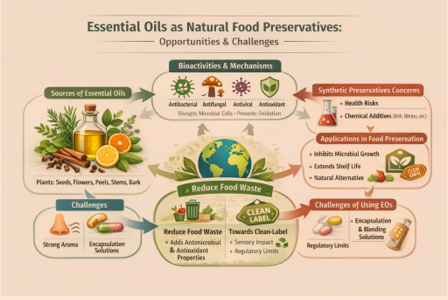
The use of medicinal plants is deeply rooted in human history, dating back to ancient civilizations. Recent years have seen an increase in studies reporting the beneficial properties of medicinal plants and spices, including their anticancer, antibacterial, antiviral, and antifungal activities. Essential Oils (EOs) are aromatic and volatile extracts obtained from various plant parts such as seeds, flowers, peels, stems, and bark. EOs are complex mixtures of secondary metabolites crucial for plant defense and survival. EOs exhibit significant antibacterial, antifungal, antiviral, antiparasitic, and anticancer activities, along with antioxidant properties, which made them a potential natural candidate for various applications in food, medicine, pharma, etc. (Boruah et al., 2023; Mozaffari Nejad, Bayat and Ahmadi, 2013; Mozaffari Nejad et al., 2018).
Growing concerns regarding the use of synthetic food preservatives—such as sodium benzoate, potassium bromate, sorbates, propyl paraben, formaldehyde, sodium nitrite/nitrate, butylated hydroxytoluene (BHT), and butylated hydroxyanisole (BHA)—are primarily associated with their potential adverse effects on human health, including possible genotoxicity, disruption of the gut microbiome, and pro-inflammatory responses. Consequently, there has been a notable shift toward the use of natural additives and preservatives. In this context, given their broad spectrum of bioactivities, essential oils (EOs) have attracted increasing attention as natural alternatives for reducing reliance on synthetic preservatives while enhancing food preservation and stabilization (Diogo Gonçalves, Paiva-Cardoso and Caramelo, 2025; Mafe and Büsselberg, 2025; Shanmugavel et al., 2020; Shi et al., 2024).
Some EOs, such as lemon, orange, peppermint, rosemary, cinnamon, and vanilla oil, are commonly explored in the food industry for their aromatic properties and potential preservative effects, contributing to the flavor and aroma of products like candies, gum, beverages, and desserts (Jaramillo Jimenez, Awwad and Desgagné-Penix, 2024; Silva et al., 2013; Xu et al., 2024). EOs from cloves, rosemary, and thyme can extend the shelf life of foods, while compounds such as carvacrol (from oregano and thyme) and cinnamaldehyde (from cinnamon) exhibit broad-spectrum antimicrobial activity, enhancing the safety of fresh produce, meat, and dairy products (Siroli et al., 2015; Nieto, 2020; Harmankaya et al., 2024; Ismael and Hadi, 2024; Jaramillo Jimenez, Awwad and Desgagné-Penix, 2024). In addition to their preservative effects, EOs may play a significant role in reducing food waste. By delaying microbial spoilage and oxidative degradation, EOs extend the shelf life of perishable foods, thereby minimizing losses throughout the food supply chain. Their incorporation into food systems can therefore contribute to both product stability and waste reduction (de Chiara et al., 2026; Diogo Gonçalves, Paiva-Cardoso and Caramelo, 2025; Salanță and Cropotova, 2022). By replacing artificial additives, EOs allow manufacturers to meet the growing demand for natural, clean-label food options (Choi et al., 2024; Diogo Gonçalves, Paiva-Cardoso and Caramelo, 2025).
Despite these potential applications, a major challenge for the widespread adoption of essential oils is their intense flavor and aroma, which can negatively impact the sensory profile of food products. To address this, researchers are developing microencapsulation techniques and synergistic blends aimed at improving EO stability and efficacy while minimizing sensory alterations (Hassid et al., 2025; Reis, Ambrosi and Luccio, 2022; Szpicer et al., 2025). The successful integration of EOs into the food industry relies heavily on the GRAS (Generally Recognized as Safe) status provided by regulatory bodies. This status, granted to many essential oils like rosemary and oregano, allows for their use as natural preservatives without formal pre-market approval (Hassid et al., 2025; Rani, Kumar and Chauhan, 2025). Advancing the use of EOs in the food industry requires close collaboration between universities and industry. Academic research is essential for identifying bioactive compounds and evaluating their antimicrobial activity, while the food industry plays a critical role in translating these findings into scalable applications that meet consumer expectations. Such partnerships are vital to developing effective, plant-based preservatives that align with the growing demand for clean-label and natural food products.
References
Boruah, T., Parashar, P., Ujir, C., Dey, S.K., Nayik, G.A., Ansari, M.J. and Mozaffari Nejad, A.S. (2023) 'Chapter 6 - Sandalwood essential oil', in G.A. Nayik and M.J. Ansari (eds.) Essential oils. London, UK: Academic Press, pp. 121-145.
Choi, D., Bedale, W., Chetty, S. and Yu, J.H. (2024) 'Comprehensive review of clean-label antimicrobials used in dairy products', Comprehensive Reviews in Food Science and Food Saftey, 23(1), p. e13263. Available at: https://doi.org/10.1111/1541-4337.13263
de Chiara, M.L.V., Essid, I., Daaloul, O., Mallek, H., Guillard, V., Coffigniez, F., Hariri, M., Lammi, S., Kurek, M., Awad, N.M.H., Abushady, A.M., Locali-Pereira, A.R., Ribeiro, N., Pereira, C.S., Goksen, G., Olivares, M. and Capozzi, V. (2026) 'Food spoilage and packaging solutions: key Mediterranean case studies', Food Research International, 229, p. 118446. Available at: https://doi.org/https://doi.org/10.1016/j.foodres.2026.118446
Diogo Gonçalves, S., Paiva-Cardoso, M.d.N. and Caramelo, A. (2025) 'Green preservation strategies: The role of essential oils in sustainable food preservatives', Sustainability, 17(16), p. 7326. Available at: https://doi.org/10.3390/su17167326
Harmankaya, S., Harmankaya, A., İşbarali, K. and Paksoy, Ö.İ. (2024) 'Effect of rosemary and clove essential oils on lipid oxidation, microbial, sensorial properties and storage stability of kavurma, a cooked meat product', Czech Journal of Food Sciences, 42(4). Available at: https://doi.org/10.17221/56/2024-CJFS
Hassid, A., Salla, M., Krayem, M., Khaled, S., Hassan, H.F. and El Khatib, S. (2025) 'A review on the versatile applications of plant-based essential oils in food flavoring, culinary uses and health benefits', Discover Food, 5(1), p. 130. Available at: https://doi.org/10.1007/s44187-025-00417-3
Ismael, F.N. and Hadi, S.T. (2024) 'The effect of thyme, rosemary, and lemongrass oils on extension of the shelf life and qualitative characteristics of Iraqi soft cheese', Functional Foods in Health and Disease, 14(1), pp. 1-13.
Jaramillo Jimenez, B.A., Awwad, F. and Desgagné-Penix, I. (2024) 'Cinnamaldehyde in focus: antimicrobial properties, biosynthetic pathway, and industrial applications', Antibiotics, 13(11), p. 1095.
Mafe, A.N. and Büsselberg, D. (2025) 'Food preservatives and the rising tide of early-onset colorectal cancer: mechanisms, controversies, and emerging innovations', Foods, 14(17), p. 3079.
Mozaffari Nejad, A.S., Bahmani, M., Shah, N.A., Shah, S.A. and Rafieian-Kopaei, M. (2018) 'Beliefs of herbal therapies of the community of the Ilam city of Ilam province, Iran', Journal of Pharmacy and Pharmacognosy Research, 6(4), pp. 299-317.
Mozaffari Nejad, A.S., Bayat, M. and Ahmadi, A.A. (2013) 'Investigation of aflatoxin B1 in spices marketed in Hyderabad, India by ELISA method.', Journal of Pure and Applied Microbiology, 7(4), pp. 3219-3223.
Nieto, G. (2020) 'A review on applications and uses of thymus in the food industry', Plants, 9(8). Available at: https://doi.org/10.3390/plants9080961
Rani, N., Kumar, V. and Chauhan, A. (2025) 'Exploring essential oils: extraction, biological roles, and food applications', Journal of Food Quality, 2025(1), p. 9985753. Available at: https://doi.org/10.1155/jfq/9985753
Reis, D.R., Ambrosi, A. and Luccio, M.D. (2022) 'Encapsulated essential oils: A perspective in food preservation', Future Foods, 5, p. 100126. Available at: https://doi.org/https://doi.org/10.1016/j.fufo.2022.100126
Salanță, L.C. and Cropotova, J. (2022) 'An update on effectiveness and practicability of plant essential oils in the food industry', Plants, 11(19), p. 2488. Available at: https://doi.org/10.3390/plants11192488
Shanmugavel, V., Komala Santhi, K., Kurup, A.H., Kalakandan, S., Anandharaj, A. and Rawson, A. (2020) 'Potassium bromate: Effects on bread components, health, environment and method of analysis: A review', Food Chemistry, 311, p. 125964. Available at: https://doi.org/10.1016/j.foodchem.2019.125964
Shi, J., Xu, J., Liu, X., Goda, A.A., Salem, S.H., Deabes, M.M., Ibrahim, M.I.M., Naguib, K. and Mohamed, S.R. (2024) 'Evaluation of some artificial food preservatives and natural plant extracts as antimicrobial agents for safety', Discover Food, 4, p. 89. Available at: https://doi.org/10.1007/s44187-024-00162-z
Silva, N., Alves, S., Gonçalves, A., Amaral, J.S. and Poeta, P. (2013) 'Antimicrobial activity of essential oils from Mediterranean aromatic plants against several foodborne and spoilage bacteria', Food Science and Technology International, 19(6), pp. 503-10. Available at: https://doi.org/10.1177/1082013212442198
Siroli, L., Patrignani, F., Gardini, F. and Lanciotti, R. (2015) 'Effects of sub-lethal concentrations of thyme and oregano essential oils, carvacrol, thymol, citral and trans-2-hexenal on membrane fatty acid composition and volatile molecule profile of Listeria monocytogenes, Escherichia coli and Salmonella enteritidis', Food Chemistry, 182, pp. 185-192. Available at: https://doi.org/https://doi.org/10.1016/j.foodchem.2015.02.136
Szpicer, A., Bińkowska, W., Stelmasiak, A., Wojtasik-Kalinowska, I., Czajkowska, A., Mierzejewska, S., Domiszewski, Z., Rydzkowski, T., Piepiórka-Stepuk, J. and Półtorak, A. (2025) 'Innovative microencapsulation techniques of bioactive compounds: Impact on physicochemical and sensory properties of food products and industrial applications', Applied Sciences, 15(22), p. 11908. Available at: https://www.mdpi.com/2076-3417/15/22/11908
Xu, F., Shi, Y., Li, B., Liu, C., Zhang, Y. and Zhong, J. (2024) 'Characterization, stability and antioxidant activity of vanilla nano-emulsion and its complex essential oil', Foods, 13(5). Available at: https://doi.org/10.3390/foods13050801
Growing concerns regarding the use of synthetic food preservatives—such as sodium benzoate, potassium bromate, sorbates, propyl paraben, formaldehyde, sodium nitrite/nitrate, butylated hydroxytoluene (BHT), and butylated hydroxyanisole (BHA)—are primarily associated with their potential adverse effects on human health, including possible genotoxicity, disruption of the gut microbiome, and pro-inflammatory responses. Consequently, there has been a notable shift toward the use of natural additives and preservatives. In this context, given their broad spectrum of bioactivities, essential oils (EOs) have attracted increasing attention as natural alternatives for reducing reliance on synthetic preservatives while enhancing food preservation and stabilization (Diogo Gonçalves, Paiva-Cardoso and Caramelo, 2025; Mafe and Büsselberg, 2025; Shanmugavel et al., 2020; Shi et al., 2024).
Some EOs, such as lemon, orange, peppermint, rosemary, cinnamon, and vanilla oil, are commonly explored in the food industry for their aromatic properties and potential preservative effects, contributing to the flavor and aroma of products like candies, gum, beverages, and desserts (Jaramillo Jimenez, Awwad and Desgagné-Penix, 2024; Silva et al., 2013; Xu et al., 2024). EOs from cloves, rosemary, and thyme can extend the shelf life of foods, while compounds such as carvacrol (from oregano and thyme) and cinnamaldehyde (from cinnamon) exhibit broad-spectrum antimicrobial activity, enhancing the safety of fresh produce, meat, and dairy products (Siroli et al., 2015; Nieto, 2020; Harmankaya et al., 2024; Ismael and Hadi, 2024; Jaramillo Jimenez, Awwad and Desgagné-Penix, 2024). In addition to their preservative effects, EOs may play a significant role in reducing food waste. By delaying microbial spoilage and oxidative degradation, EOs extend the shelf life of perishable foods, thereby minimizing losses throughout the food supply chain. Their incorporation into food systems can therefore contribute to both product stability and waste reduction (de Chiara et al., 2026; Diogo Gonçalves, Paiva-Cardoso and Caramelo, 2025; Salanță and Cropotova, 2022). By replacing artificial additives, EOs allow manufacturers to meet the growing demand for natural, clean-label food options (Choi et al., 2024; Diogo Gonçalves, Paiva-Cardoso and Caramelo, 2025).
Despite these potential applications, a major challenge for the widespread adoption of essential oils is their intense flavor and aroma, which can negatively impact the sensory profile of food products. To address this, researchers are developing microencapsulation techniques and synergistic blends aimed at improving EO stability and efficacy while minimizing sensory alterations (Hassid et al., 2025; Reis, Ambrosi and Luccio, 2022; Szpicer et al., 2025). The successful integration of EOs into the food industry relies heavily on the GRAS (Generally Recognized as Safe) status provided by regulatory bodies. This status, granted to many essential oils like rosemary and oregano, allows for their use as natural preservatives without formal pre-market approval (Hassid et al., 2025; Rani, Kumar and Chauhan, 2025). Advancing the use of EOs in the food industry requires close collaboration between universities and industry. Academic research is essential for identifying bioactive compounds and evaluating their antimicrobial activity, while the food industry plays a critical role in translating these findings into scalable applications that meet consumer expectations. Such partnerships are vital to developing effective, plant-based preservatives that align with the growing demand for clean-label and natural food products.
References
Boruah, T., Parashar, P., Ujir, C., Dey, S.K., Nayik, G.A., Ansari, M.J. and Mozaffari Nejad, A.S. (2023) 'Chapter 6 - Sandalwood essential oil', in G.A. Nayik and M.J. Ansari (eds.) Essential oils. London, UK: Academic Press, pp. 121-145.
Choi, D., Bedale, W., Chetty, S. and Yu, J.H. (2024) 'Comprehensive review of clean-label antimicrobials used in dairy products', Comprehensive Reviews in Food Science and Food Saftey, 23(1), p. e13263. Available at: https://doi.org/10.1111/1541-4337.13263
de Chiara, M.L.V., Essid, I., Daaloul, O., Mallek, H., Guillard, V., Coffigniez, F., Hariri, M., Lammi, S., Kurek, M., Awad, N.M.H., Abushady, A.M., Locali-Pereira, A.R., Ribeiro, N., Pereira, C.S., Goksen, G., Olivares, M. and Capozzi, V. (2026) 'Food spoilage and packaging solutions: key Mediterranean case studies', Food Research International, 229, p. 118446. Available at: https://doi.org/https://doi.org/10.1016/j.foodres.2026.118446
Diogo Gonçalves, S., Paiva-Cardoso, M.d.N. and Caramelo, A. (2025) 'Green preservation strategies: The role of essential oils in sustainable food preservatives', Sustainability, 17(16), p. 7326. Available at: https://doi.org/10.3390/su17167326
Harmankaya, S., Harmankaya, A., İşbarali, K. and Paksoy, Ö.İ. (2024) 'Effect of rosemary and clove essential oils on lipid oxidation, microbial, sensorial properties and storage stability of kavurma, a cooked meat product', Czech Journal of Food Sciences, 42(4). Available at: https://doi.org/10.17221/56/2024-CJFS
Hassid, A., Salla, M., Krayem, M., Khaled, S., Hassan, H.F. and El Khatib, S. (2025) 'A review on the versatile applications of plant-based essential oils in food flavoring, culinary uses and health benefits', Discover Food, 5(1), p. 130. Available at: https://doi.org/10.1007/s44187-025-00417-3
Ismael, F.N. and Hadi, S.T. (2024) 'The effect of thyme, rosemary, and lemongrass oils on extension of the shelf life and qualitative characteristics of Iraqi soft cheese', Functional Foods in Health and Disease, 14(1), pp. 1-13.
Jaramillo Jimenez, B.A., Awwad, F. and Desgagné-Penix, I. (2024) 'Cinnamaldehyde in focus: antimicrobial properties, biosynthetic pathway, and industrial applications', Antibiotics, 13(11), p. 1095.
Mafe, A.N. and Büsselberg, D. (2025) 'Food preservatives and the rising tide of early-onset colorectal cancer: mechanisms, controversies, and emerging innovations', Foods, 14(17), p. 3079.
Mozaffari Nejad, A.S., Bahmani, M., Shah, N.A., Shah, S.A. and Rafieian-Kopaei, M. (2018) 'Beliefs of herbal therapies of the community of the Ilam city of Ilam province, Iran', Journal of Pharmacy and Pharmacognosy Research, 6(4), pp. 299-317.
Mozaffari Nejad, A.S., Bayat, M. and Ahmadi, A.A. (2013) 'Investigation of aflatoxin B1 in spices marketed in Hyderabad, India by ELISA method.', Journal of Pure and Applied Microbiology, 7(4), pp. 3219-3223.
Nieto, G. (2020) 'A review on applications and uses of thymus in the food industry', Plants, 9(8). Available at: https://doi.org/10.3390/plants9080961
Rani, N., Kumar, V. and Chauhan, A. (2025) 'Exploring essential oils: extraction, biological roles, and food applications', Journal of Food Quality, 2025(1), p. 9985753. Available at: https://doi.org/10.1155/jfq/9985753
Reis, D.R., Ambrosi, A. and Luccio, M.D. (2022) 'Encapsulated essential oils: A perspective in food preservation', Future Foods, 5, p. 100126. Available at: https://doi.org/https://doi.org/10.1016/j.fufo.2022.100126
Salanță, L.C. and Cropotova, J. (2022) 'An update on effectiveness and practicability of plant essential oils in the food industry', Plants, 11(19), p. 2488. Available at: https://doi.org/10.3390/plants11192488
Shanmugavel, V., Komala Santhi, K., Kurup, A.H., Kalakandan, S., Anandharaj, A. and Rawson, A. (2020) 'Potassium bromate: Effects on bread components, health, environment and method of analysis: A review', Food Chemistry, 311, p. 125964. Available at: https://doi.org/10.1016/j.foodchem.2019.125964
Shi, J., Xu, J., Liu, X., Goda, A.A., Salem, S.H., Deabes, M.M., Ibrahim, M.I.M., Naguib, K. and Mohamed, S.R. (2024) 'Evaluation of some artificial food preservatives and natural plant extracts as antimicrobial agents for safety', Discover Food, 4, p. 89. Available at: https://doi.org/10.1007/s44187-024-00162-z
Silva, N., Alves, S., Gonçalves, A., Amaral, J.S. and Poeta, P. (2013) 'Antimicrobial activity of essential oils from Mediterranean aromatic plants against several foodborne and spoilage bacteria', Food Science and Technology International, 19(6), pp. 503-10. Available at: https://doi.org/10.1177/1082013212442198
Siroli, L., Patrignani, F., Gardini, F. and Lanciotti, R. (2015) 'Effects of sub-lethal concentrations of thyme and oregano essential oils, carvacrol, thymol, citral and trans-2-hexenal on membrane fatty acid composition and volatile molecule profile of Listeria monocytogenes, Escherichia coli and Salmonella enteritidis', Food Chemistry, 182, pp. 185-192. Available at: https://doi.org/https://doi.org/10.1016/j.foodchem.2015.02.136
Szpicer, A., Bińkowska, W., Stelmasiak, A., Wojtasik-Kalinowska, I., Czajkowska, A., Mierzejewska, S., Domiszewski, Z., Rydzkowski, T., Piepiórka-Stepuk, J. and Półtorak, A. (2025) 'Innovative microencapsulation techniques of bioactive compounds: Impact on physicochemical and sensory properties of food products and industrial applications', Applied Sciences, 15(22), p. 11908. Available at: https://www.mdpi.com/2076-3417/15/22/11908
Xu, F., Shi, Y., Li, B., Liu, C., Zhang, Y. and Zhong, J. (2024) 'Characterization, stability and antioxidant activity of vanilla nano-emulsion and its complex essential oil', Foods, 13(5). Available at: https://doi.org/10.3390/foods13050801
References
1. Boruah, T., Parashar, P., Ujir, C., Dey, S.K., Nayik, G.A., Ansari, M.J. and Mozaffari Nejad, A.S. (2023) 'Chapter 6 - Sandalwood essential oil', in G.A. Nayik and M.J. Ansari (eds.) Essential oils. London, UK: Academic Press, pp. 121-145. [DOI:10.1016/B978-0-323-91740-7.00003-7]
2. Choi, D., Bedale, W., Chetty, S. and Yu, J.H. (2024) 'Comprehensive review of clean-label antimicrobials used in dairy products', Comprehensive Reviews in Food Science and Food Saftey, 23(1), p. e13263. Available at: [DOI:10.1111/1541-4337.13263] [PMID]
3. de Chiara, M.L.V., Essid, I., Daaloul, O., Mallek, H., Guillard, V., Coffigniez, F., Hariri, M., Lammi, S., Kurek, M., Awad, N.M.H., Abushady, A.M., Locali-Pereira, A.R., Ribeiro, N., Pereira, C.S., Goksen, G., Olivares, M. and Capozzi, V. (2026) 'Food spoilage and packaging solutions: key Mediterranean case studies', Food Research International, 229, p. 118446. Available at:
https://doi.org/10.1016/j.foodres.2026.118446 [DOI:https://doi.org/10.1016/j.foodres.2026.118446] [PMID]
4. Diogo Gonçalves, S., Paiva-Cardoso, M.d.N. and Caramelo, A. (2025) 'Green preservation strategies: The role of essential oils in sustainable food preservatives', Sustainability, 17(16), p. 7326. Available at: [DOI:10.3390/su17167326]
5. Harmankaya, S., Harmankaya, A., İşbarali, K. and Paksoy, Ö.İ. (2024) 'Effect of rosemary and clove essential oils on lipid oxidation, microbial, sensorial properties and storage stability of kavurma, a cooked meat product', Czech Journal of Food Sciences, 42(4). Available at: [DOI:10.17221/56/2024-CJFS]
6. Hassid, A., Salla, M., Krayem, M., Khaled, S., Hassan, H.F. and El Khatib, S. (2025) 'A review on the versatile applications of plant-based essential oils in food flavoring, culinary uses and health benefits', Discover Food, 5(1), p. 130. Available at: [DOI:10.1007/s44187-025-00417-3]
7. Ismael, F.N. and Hadi, S.T. (2024) 'The effect of thyme, rosemary, and lemongrass oils on extension of the shelf life and qualitative characteristics of Iraqi soft cheese', Functional Foods in Health and Disease, 14(1), pp. 1-13. [DOI:10.31989/ffhd.v14i1.1262]
8. Jaramillo Jimenez, B.A., Awwad, F. and Desgagné-Penix, I. (2024) 'Cinnamaldehyde in focus: antimicrobial properties, biosynthetic pathway, and industrial applications', Antibiotics, 13(11), p. 1095. [DOI:10.3390/antibiotics13111095] [PMID] [PMCID]
9. Mafe, A.N. and Büsselberg, D. (2025) 'Food preservatives and the rising tide of early-onset colorectal cancer: mechanisms, controversies, and emerging innovations', Foods, 14(17), p. 3079. [DOI:10.3390/foods14173079] [PMID] [PMCID]
10. Mozaffari Nejad, A.S., Bahmani, M., Shah, N.A., Shah, S.A. and Rafieian-Kopaei, M. (2018) 'Beliefs of herbal therapies of the community of the Ilam city of Ilam province, Iran', Journal of Pharmacy and Pharmacognosy Research, 6(4), pp. 299-317. [DOI:10.56499/jppres17.309_6.4.299] [PMID]
11. Mozaffari Nejad, A.S., Bayat, M. and Ahmadi, A.A. (2013) 'Investigation of aflatoxin B1 in spices marketed in Hyderabad, India by ELISA method.', Journal of Pure and Applied Microbiology, 7(4), pp. 3219-3223.
12. Nieto, G. (2020) 'A review on applications and uses of thymus in the food industry', Plants, 9(8). Available at: [DOI:10.3390/plants9080961] [PMID] [PMCID]
13. Rani, N., Kumar, V. and Chauhan, A. (2025) 'Exploring essential oils: extraction, biological roles, and food applications', Journal of Food Quality, 2025(1), p. 9985753. Available at: [DOI:10.1155/jfq/9985753]
14. Reis, D.R., Ambrosi, A. and Luccio, M.D. (2022) 'Encapsulated essential oils: A perspective in food preservation', Future Foods, 5, p. 100126. Available at:
https://doi.org/10.1016/j.fufo.2022.100126 [DOI:https://doi.org/10.1016/j.fufo.2022.100126]
15. Salanță, L.C. and Cropotova, J. (2022) 'An update on effectiveness and practicability of plant essential oils in the food industry', Plants, 11(19), p. 2488. Available at: [DOI:10.3390/plants11192488] [PMID] [PMCID]
16. Shanmugavel, V., Komala Santhi, K., Kurup, A.H., Kalakandan, S., Anandharaj, A. and Rawson, A. (2020) 'Potassium bromate: Effects on bread components, health, environment and method of analysis: A review', Food Chemistry, 311, p. 125964. Available at: [DOI:10.1016/j.foodchem.2019.125964] [PMID]
17. Shi, J., Xu, J., Liu, X., Goda, A.A., Salem, S.H., Deabes, M.M., Ibrahim, M.I.M., Naguib, K. and Mohamed, S.R. (2024) 'Evaluation of some artificial food preservatives and natural plant extracts as antimicrobial agents for safety', Discover Food, 4, p. 89. Available at: [DOI:10.1007/s44187-024-00162-z]
18. Silva, N., Alves, S., Gonçalves, A., Amaral, J.S. and Poeta, P. (2013) 'Antimicrobial activity of essential oils from Mediterranean aromatic plants against several foodborne and spoilage bacteria', Food Science and Technology International, 19(6), pp. 503-10. Available at: [DOI:10.1177/1082013212442198] [PMID]
19. Siroli, L., Patrignani, F., Gardini, F. and Lanciotti, R. (2015) 'Effects of sub-lethal concentrations of thyme and oregano essential oils, carvacrol, thymol, citral and trans-2-hexenal on membrane fatty acid composition and volatile molecule profile of Listeria monocytogenes, Escherichia coli and Salmonella enteritidis', Food Chemistry, 182, pp. 185-192. Available at:
https://doi.org/10.1016/j.foodchem.2015.02.136 [DOI:https://doi.org/10.1016/j.foodchem.2015.02.136] [PMID]
20. Szpicer, A., Bińkowska, W., Stelmasiak, A., Wojtasik-Kalinowska, I., Czajkowska, A., Mierzejewska, S., Domiszewski, Z., Rydzkowski, T., Piepiórka-Stepuk, J. and Półtorak, A. (2025) 'Innovative microencapsulation techniques of bioactive compounds: Impact on physicochemical and sensory properties of food products and industrial applications', Applied Sciences, 15(22), p. 11908. Available at: https://www.mdpi.com/2076-3417/15/22/11908 [DOI:10.3390/app152211908]
21. Xu, F., Shi, Y., Li, B., Liu, C., Zhang, Y. and Zhong, J. (2024) 'Characterization, stability and antioxidant activity of vanilla nano-emulsion and its complex essential oil', Foods, 13(5). Available at: [DOI:10.3390/foods13050801] [PMID] [PMCID]
| Rights and permissions | |
 |
This work is licensed under a Creative Commons Attribution-NonCommercial 4.0 International License. |